Super C vs. Class A diesel pusher: which heavy hauler fits?
Super C vs Class A diesel pusher: chassis, towing capacity, ride, space, service access and Texas licensing compared. Houston sellers: we buy both.
Published · By the Cash For RV team, Houston
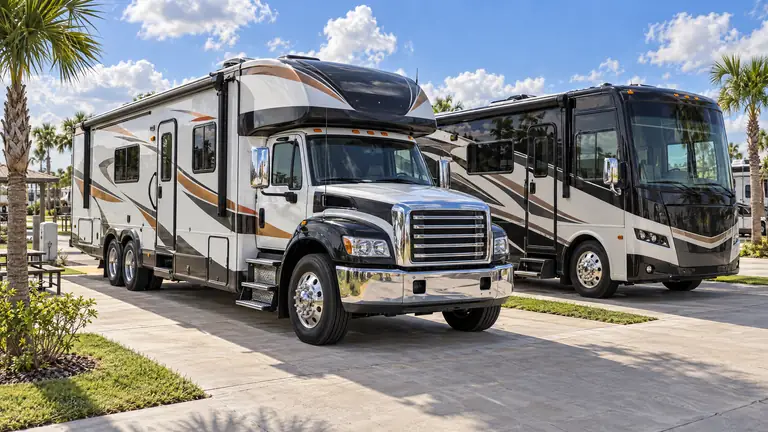
In a Super C vs. Class A diesel pusher comparison, a diesel Super C is a strong candidate when you prioritize verified heavy towing capability, a conventional truck cab and hood-access engine service. A diesel pusher generally offers a quieter front cockpit and more living space at the same overall length. Neither category automatically wins on towing, safety, ownership cost or resale, so compare the exact coaches.
This comparison covers diesel Super Cs, not ordinary gasoline Class C motorhomes. If you are still sorting out the broader body styles, our Class A vs. Class C motorhome comparison explains those differences. Here, the practical questions are what you tow, how each coach drives, how much usable space you need and what its weight ratings require in Texas.
The short version
- Compare manufacturer towing limits and loaded weights, not just the receiver rating or motorhome category.
- A diesel pusher generally provides a quieter front cockpit and more unobstructed basement storage.
- Super C ride comfort depends heavily on the chassis, cab suspension and actual coach.
- Personal-use RVs are CDL-exempt in Texas, but noncommercial Class A or B licensing may still apply.
- Condition, maintenance records and the exact model matter more to valuation than a presumed category-wide resale advantage.
| Feature | Super C | Class A diesel pusher |
|---|---|---|
| Towing capability | Newmar advertises 20,000-pound towing for its 2026 Super Star; verify combined ratings, loading and hitch limits. | Compare the exact coach's towing rating, combined rating, loaded weight and hitch limits; do not assume a category ceiling. |
| Ride and suspension | Often more truck-like; Newmar's 2026 Super Star has a full air-ride cab. | Generally softer on air suspension, but owner preferences and individual coach configurations differ. |
| Cockpit noise | Front diesel placement can make engine and fan sound more noticeable near the driver. | Rear engine placement generally reduces front-seat engine noise, without eliminating road, wind or interior sound. |
| Living space | Hood and cab generally leave less full-width living space at equal overall length. | Full-width front coach area generally provides more living room at equal overall length. |
| Exterior storage | Front-to-rear drivetrain can constrain basement layout; measure individual bays and check cargo limits. | Rear drivetrain generally permits more unobstructed pass-through storage; openings, trays and usable dimensions vary. |
| Texas licensing | Texas DPS uses vehicle and combination ratings, not the Super C label. | Texas DPS requires Class B at 26,001-pound single-vehicle GVWR; qualifying heavy-trailer combinations require Class A. |
| Chassis and engine | Front diesel with conventional truck cab; Freightliner M2, S2RV and historical Ford F-600 examples have different specifications. | Rear diesel under a coach body; Newmar's 2026 Dutch Star offers Freightliner or Spartan chassis. |
| Safety equipment | Newmar's 2026 Super Star lists lane warning and tire-pressure monitoring; a truck cab does not establish universal crash superiority. | Newmar's 2026 Dutch Star lists stability control and lane warning, with optional collision mitigation and adaptive cruise. |
| Family sleeping | Selected Newmar Super Star layouts offer optional cab-over sleeping or dedicated bunks; verify the floor plan. | Newmar's 2026 Dutch Star 4340 includes dedicated bunks and two full bathrooms. |
| Maintenance access | Truck hood can simplify engine checks and some service access; shop acceptance and total costs still vary. | Engine access depends on coach design; confirm chassis service, coach-system service and shop acceptance. |
| Purchase price examples | Newmar advertises approximately $500,000 starting pricing for its 2026 Super Star, not a category average. | Newmar advertises approximately $620,000 starting pricing for its 2026 Dutch Star, not a category average. |
| Resale and valuation | Exact model, chassis, condition, mileage, equipment and documentation matter; no automatic category premium. | Use comparable coaches and condition-specific valuation; asking prices are not guaranteed cash offers. |
| Cockpit and entry | Conventional windshield and cab feel familiar to some drivers; check steps, seating and cab-to-coach access. | Large front windshield provides a panoramic view; entry arrangements and driver comfort vary. |
| Best-fit priorities | Verified heavy towing, conventional truck controls and hood-access service, provided the floor plan and storage meet your needs. | Quieter front cockpit, living space and basement storage, provided towing capability and service arrangements meet your needs. |
Super C vs. Class A diesel pusher: what changes underneath?
The fundamental difference is a front-engine truck-style cab versus a rear-engine coach chassis. One RV dealer's guide describes the Super C as retaining a conventional cab, while the diesel pusher places its engine behind the living area. That layout affects service access, cockpit sound and storage packaging.
Newmar's 2026 Super Star illustrates the Freightliner M2 Super C motorhome configuration: the manufacturer lists an M2-106 with 360 horsepower and an M2-112 with 450 horsepower. But Freightliner does not mean M2 in every case. Tiffin identifies its 2027 Allegro Bay as using the Freightliner S2RV.
Ford F-600 Super C motorhomes also exist. Thor's June 2021 announcement identifies Magnitude and Omni BT36 models on the F600 4x4 chassis; those are historical examples, not specifications for every current coach. For comparison, Newmar offers its 2026 Dutch Star diesel pusher on Freightliner or Spartan chassis. Our diesel-pusher vs. gas-motorhome guide covers the separate fuel-and-powertrain comparison.
Does a Super C always tow more?
A Super C does not automatically out-tow a diesel pusher, although particular truck-chassis models have substantial towing ratings. Newmar advertises 20,000 pounds of towing capacity for the 2026 Super Star. Thor's historical F600 announcement instead lists a 12,000-pound hitch and 22,000-pound GVWR, illustrating why you cannot transfer one model's specifications to another.
A receiver rating alone does not establish Super C motorhome towing capacity under every loading condition. You need the coach manufacturer's towing limits, gross combined weight rating (GCWR), actual loaded weights and applicable hitch and tongue-weight limits. The trailer's loaded weight and its rating answer different questions, including the licensing question.
Apply the same checks to a diesel pusher rather than assuming a universal towing ceiling. Before committing to either coach, identify the actual vehicle or trailer you intend to pull and confirm the complete setup with the manufacturer.
- Check the exact model year, chassis and coach manufacturer's towing specifications.
- Account for passengers, water, cargo and the proposed towed vehicle.
- Verify hitch limits and required towing equipment for the complete combination.
Which rides better and causes less driver fatigue?
A diesel pusher generally offers a softer ride and less engine sound at the front seats, but comfort is not determined by category alone. One RV dealer's guide describes Super Cs as more commercial-truck-like and diesel pushers as generally softer on air suspension. Owners on RV forums disagree about which handling response they prefer.
Front-engine placement brings the Super C's diesel closer to the driver and passenger. A rear engine usually reduces that particular noise at the diesel pusher's cockpit, but it does not eliminate wind, road or interior noise. Insulation, seats and suspension configuration can change your experience substantially.
Newmar specifies a full air-ride cab on the 2026 Super Star, so a harsh Super C ride is not inevitable. Cab suspension is distinct from axle suspension and an air-suspension seat. For long driving days, compare similar-size coaches under similar loads, and have every intended driver assess steering effort, visibility, seat support and noise.
Which gives you more living space and storage?
A diesel pusher generally gives you more full-width living space at equal overall length and more unobstructed pass-through basement space. One RV dealer's guide attributes those tendencies to the Super C's hood, conventional cab and front-to-rear driveshaft. They are packaging differences, not a guarantee about every floor plan.
Measure the storage openings and usable compartments on the actual coaches. A tray, structural obstruction or awkward bay shape can matter more than an advertised storage description. Check cargo-weight limits as well, because room for an item does not establish that you can carry its weight.
Neither category is limited to a particular household size or accommodation level. Newmar offers optional cab-over sleeping on selected 2026 Super Star floor plans and dedicated midship bunks, alongside equipment such as porcelain tile and a residential-size refrigerator. Newmar's 2026 Dutch Star 4340 has dedicated bunks and two full bathrooms. Compare sleeping arrangements, belted travel positions and daily access with slides retracted.
Is a Super C motorhome safer?
A conventional truck cab does not establish a universal Super C crash-safety advantage over a Class A diesel pusher. The hood and familiar driving position may influence your confidence, but cockpit appearance is not a crashworthiness rating. Safety equipment needs to be checked by chassis, model year and installed options.
Newmar lists Detroit Assurance 5.0 lane-departure warning and tire-pressure monitoring on the 2026 Super Star. Driver assistance is also available on diesel pushers: Newmar's 2026 Dutch Star features include anti-lock brakes, traction control, electronic stability control and Mobileye lane warning. Its OnGuard collision mitigation with adaptive cruise control is optional.
During an inspection, verify which systems are installed and functioning rather than assuming the coach has them. Also check seating, restraints, tires and visibility. Driver-assistance features do not establish that either entire motorhome category is safer in every crash.
Are Super Cs cheaper to maintain and better at holding value?
A Super C's hood can simplify engine access, but it does not prove lower maintenance costs or stronger resale value. In an RV forum discussion, a manufacturer's motorized general manager explains that the M2 hood provides outside access to fluid reservoirs and service items. Diesel-pusher access arrangements depend on the coach.
Confirm service availability before choosing either type. Ask whether a shop accepts the completed motorhome, services its particular chassis and handles the work you need. Engine access does not answer questions about roof repairs, slides, appliances or other coach systems.
Purchase prices also overlap across brands and years. Newmar advertises an approximately $500,000 starting price for its 2026 Super Star and approximately $620,000 for its 2026 Dutch Star. Those manufacturer examples illustrate that product pairing, not category averages or negotiated transaction prices.
For Super C motorhome resale value, use the same model-specific approach you would use for a diesel pusher. A marketplace valuation guide emphasizes age, overall condition, documented maintenance, water damage, roof condition, tire age and paint. Match the year, floor plan, chassis, mileage and equipment, then distinguish retail asking prices from private-sale expectations and direct purchase offers. A listing is not proof of a completed sale.
What Texas driver license does a heavy motorhome require?
Texas motorhome licensing follows vehicle ratings and combination rules, not the marketing labels Class A or Super C. Texas DPS lists recreational vehicles driven for personal use as CDL-exempt, but says an appropriate noncommercial Class A or B license can still be required. CDL exemption does not mean every RV qualifies for an ordinary Class C license.
Texas DPS places a single vehicle with GVWR of 26,001 pounds or more in Class B. That class also covers such a vehicle towing a vehicle whose GVWR does not exceed 10,000 pounds. The threshold concerns the rated weight, not a temporary scale weight after you unload cargo.
Texas DPS specifies Class A for a combination with GCWR of 26,001 pounds or more when the towed vehicle or vehicles have GVWR exceeding 10,000 pounds. A heavy enclosed car or equipment trailer can therefore change the requirement. Confirm your ratings and intended combination with DPS, including the applicable noncommercial application and testing process.
Who should prioritize a Super C or a diesel pusher?
Prioritize a Super C when its verified towing capability, conventional cab and hood-access service match your needs; prioritize a diesel pusher when front-cockpit quiet, living room and basement packaging matter most. Either choice still needs to pass your actual towing, storage and driving requirements.
Start with how often you will use the coach, how long your trips will be and how many people need sleeping and belted seating positions. Then ask every intended driver what would make them comfortable driving it. A request for a smaller motorhome may reflect visibility, entry steps or driving confidence rather than overall length alone.
Walk through both coaches with slides retracted, inspect access between cab and living area, and test-drive each. Familiar truck controls may suit one driver while another prefers the diesel pusher's panoramic windshield and steering response. Choose the particular motorhome that works for your household, not a category reputation.
Selling either motorhome in Greater Houston
We buy both Super C motorhomes and Class A diesel pushers in Greater Houston, including worn, damaged and non-running units for consideration. For either type, we review the exact model, chassis, mileage, options, maintenance history, tires, roof and disclosed water damage. Some units may not be a fit, and we say so honestly.
Our Class C motorhome buying page and Class A motorhome buying page explain the relevant categories. Share details and photos to request a cash offer, often available the same day, then we arrange an in-person look wherever the RV is locally.
We only buy RVs. There are no fees, commissions or obligation, and if your description matches the inspection, the offer stands. At signing, we pay, handle title paperwork and any lender payoff, and remove the RV at no cost. See how our buying process works.
Frequently asked questions
What wheel-cut angle should I expect on a Dynamax Force?
Check the exact model year and chassis specifications with Dynamax or the chassis manufacturer. A wheel-cut figure from an older owner discussion should not be carried over to a different coach. During a test drive, assess turning clearance, rear swing and maneuvering in a space comparable to your storage location rather than relying on steering angle alone.
Will I miss the big windshield after switching to a Super C?
You may, especially if the broad Class A windshield is something you enjoy about driving your current coach. A Super C's conventional truck windshield, hood and cab create a different sight picture. Sit in both driver's seats and compare forward visibility, mirrors and seating adjustment. Neither the panoramic view nor the familiar truck layout suits every driver.
Should my partner test-drive both motorhomes too?
Yes, if your partner may drive the motorhome, their comfort should be part of the decision. Have them evaluate seat adjustment, pedal reach, mirrors, steering response and entry steps in each coach. Ask what specifically makes a coach feel too large. Overall length alone may not resolve concerns about visibility or confidence behind the wheel.
Does the F-600 badge mean I can use my existing Texas license?
No, the chassis badge alone does not determine the license class. Thor's historical F600 example has a 22,000-pound GVWR, below the Texas DPS single-vehicle Class B threshold, but a qualifying trailer combination can still require Class A. Check the actual motorhome and trailer ratings, then confirm your required noncommercial license and testing requirements with Texas DPS.
Can I sell either type to Cash For RV while it still has a loan?
Yes, we can buy a Super C or diesel pusher with an outstanding loan and pay the lender directly. You receive any equity remaining after payoff. If you owe more than our offer, you must cover the difference at closing. We do not make loans. Confirm the payoff amount and release requirements with your lender before signing.
Sources
- Texas DPS: Classes of driver licenses
- Texas DPS: CDL-exempt drivers
- Newmar: 2026 Super Star
- Newmar: 2026 Dutch Star
- Newmar: 2026 Dutch Star features
- Thor Motor Coach: Super C safety and convenience announcement
- Tiffin Motorhomes: Allegro Bay
- Poulsbo RV: Super C vs. diesel pusher comparison
- Forest River Forums: Super C vs. diesel pusher driving and ride discussion
- RVshare: RV valuation guide
Related pages
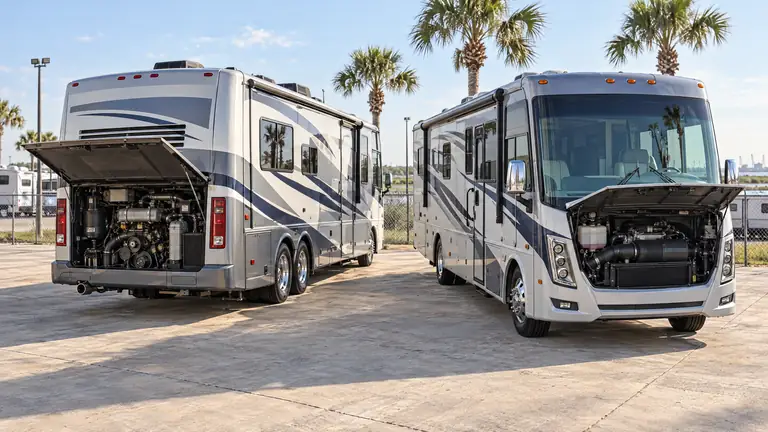 GuideDiesel pusher vs. gas motorhome: how they really compareEngine, chassis, ride, upkeep and resale side by side.Read more
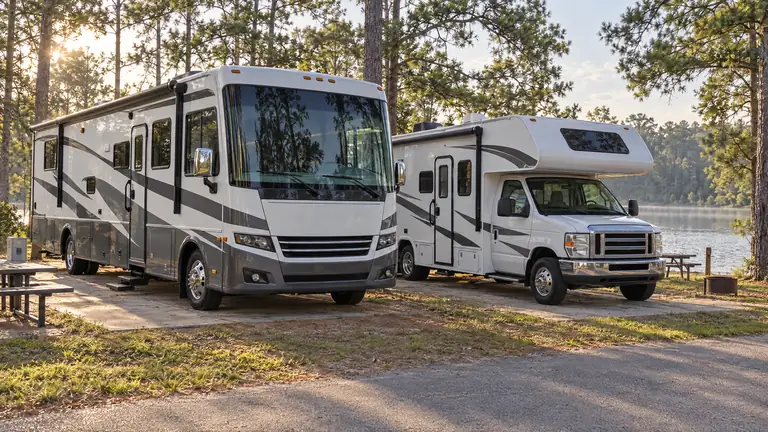 GuideClass A vs. Class C motorhome: the real differencesSize, chassis, driving and upkeep compared.Read more
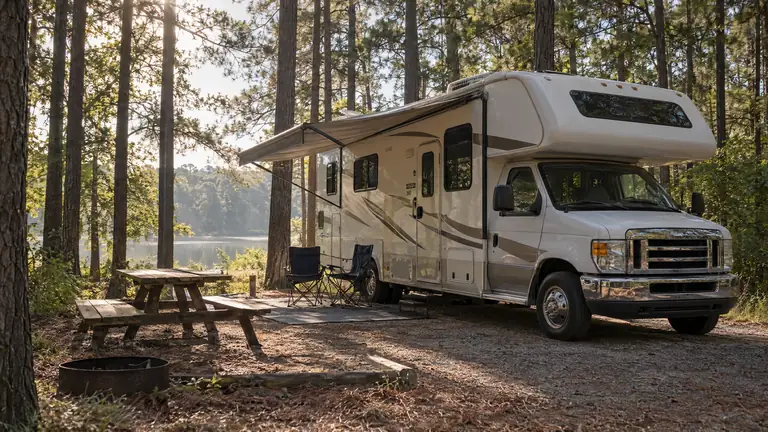 RV typeSell your Class C motorhome in HoustonCab-over motorhomes and Super Cs.Read more
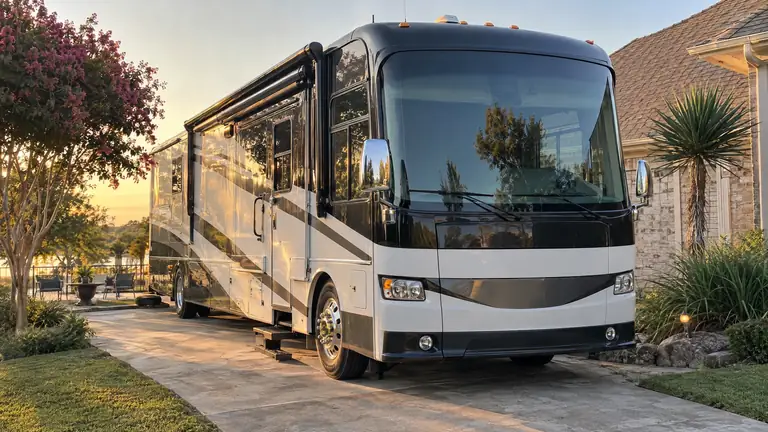 RV typeSell your Class A motorhome in HoustonGas coaches and diesel pushers, running or not.Read more
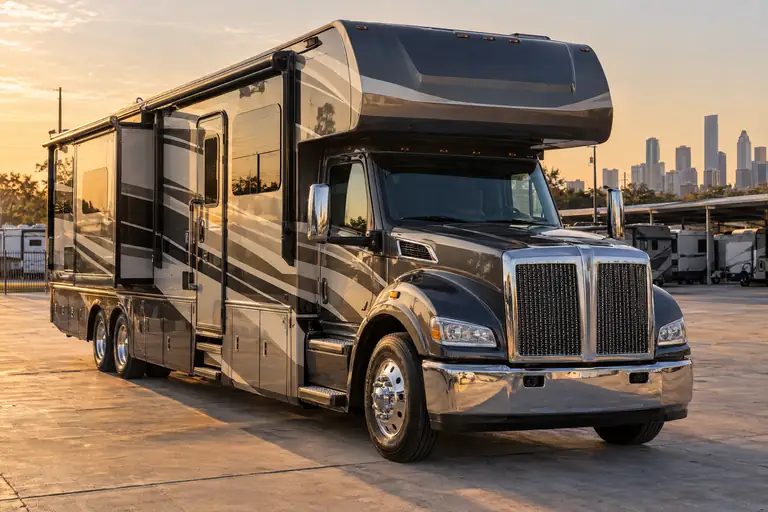 MakeSell your Dynamax Motorhome in Houston for cashIsata, DynaQuest, Europa and other Dynamax models.Read more
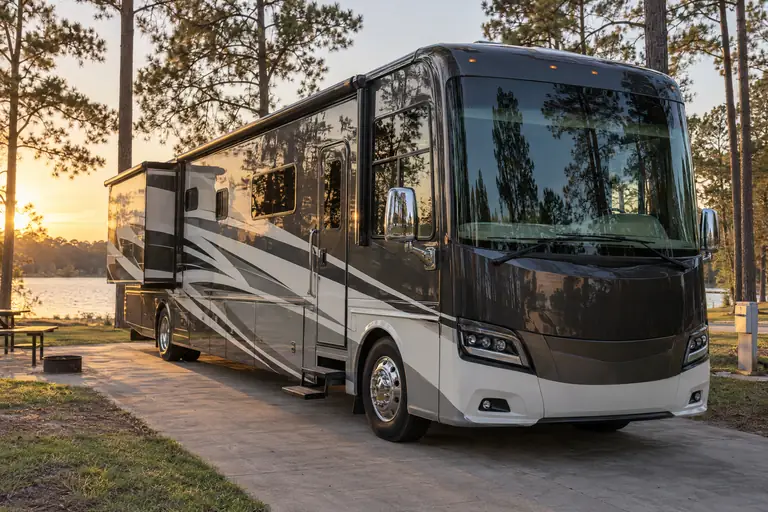 MakeSell your Entegra Coach in Houston for cashOdyssey, Vision, Accolade and other Entegra Coach models.Read more
Ready when you are
Get a real number for your RV, not a listing estimate.
Send a few details and photos. We'll come back with a cash offer, and if it works for you, we handle the paperwork and the pickup.