How many miles is a lot for a motorhome?
How many miles is a lot for a motorhome? Gas vs diesel engine life, annual miles, generator hours, low-mileage risks and what buyers check.
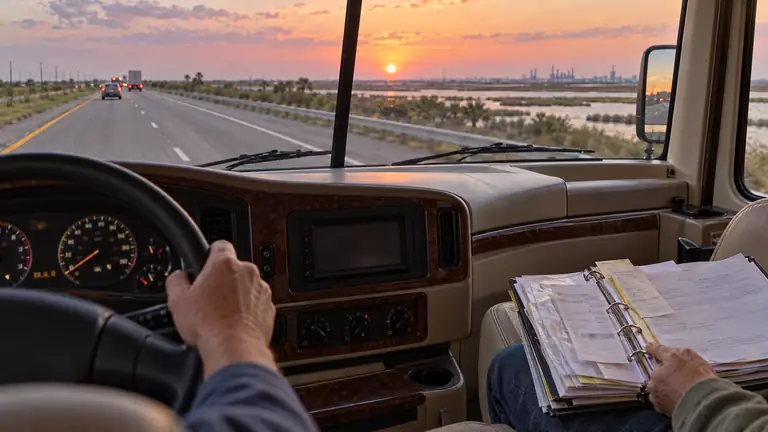
Published · By the Cash For RV team, Houston
There is no universal answer to how many miles is a lot for a motorhome. One RV publication estimates roughly 150,000–200,000 miles of drivetrain life for a properly maintained gas motorhome and 300,000–500,000 miles for a similarly maintained diesel, but those are broad estimates, not manufacturer guarantees. Service history, storage conditions and the condition of the coach matter more than judging the odometer alone.
A high-mileage motorhome with documented maintenance can deserve more confidence than a lightly driven coach with neglected tires, leaks or missing service records. Road mileage, generator hours and house-system condition tell different stories, so evaluate each separately before deciding whether your motorhome is worn out or still useful.
The short version
- Gas and diesel lifespan estimates describe potential drivetrain longevity, not guaranteed remaining life.
- Maintenance deadlines can arrive by calendar date even when road mileage stays low.
- Low mileage does not rule out deteriorated tires, storage damage or neglected house systems.
- Generator hours require model-specific maintenance records and an operating check, not a universal cutoff.
- Mileage affects buyer interest and value alongside age, condition, repair needs and market demand.
How many miles is a lot for a gas or diesel motorhome?
Mileage becomes concerning when it accompanies poor maintenance or deteriorating condition, rather than when every motorhome crosses the same threshold. Engine model, load history, age and inspection findings all affect the meaning of the odometer reading.
One RV publication estimates approximately 150,000–200,000 miles of engine and transmission life for gas motorhomes serviced according to manufacturer recommendations. Its comparable diesel motorhome life expectancy estimate is approximately 300,000–500,000 miles. Neither range predicts when an individual drivetrain will fail, and subtracting your mileage from either range does not establish remaining life.
Gas motorhome life expectancy and diesel longevity also say little about whether the whole vehicle remains economical to maintain. A sound drivetrain cannot cancel out extensive water damage or failing house systems. Our guide to diesel pusher versus gas motorhomes explains the broader differences.
There is no dependable current U.S. motorhome-only annual-mileage benchmark here. A UK technical columnist estimated approximately 3,000–5,000 miles annually in a 2018 column, but that dated editorial estimate is not a U.S. average or a high-mileage cutoff.
Why do maintenance records matter more than the odometer?
Maintenance records show whether required work happened, while the odometer only shows distance traveled. Look for dated invoices identifying the engine or chassis, the mileage at service and the work performed.
Cummins explicitly applies its B/ISB motorhome maintenance intervals at whichever comes first, elapsed months or mileage. As a model-specific example, Cummins lists oil and filter service for its 2007–2020 ISB6.7/B6.7 motorhome engines at 12 months or 15,000 miles, and its 2021-and-newer listing at 18 months or 20,000 miles. These schedules do not apply automatically to other diesels, gas engines or generators.
Match invoices against the exact engine and chassis manuals. Missing paperwork does not prove neglect, but it leaves more questions for an inspection and makes confident claims about motorhome engine life harder to support.
- Dated engine, transmission and chassis service invoices.
- Generator maintenance logs showing dates and running hours.
- Tire replacement receipts and manufacturing dates.
- Roof and seam maintenance records, plus major repair documentation.
Can a very low-mileage motorhome have problems from sitting?
A very low-mileage motorhome can be sound, but its storage and maintenance history need checking. Low use is neither an automatic advantage nor proof that something is wrong.
Ask where it was stored, how regularly it was driven and whether fluids, batteries, tires and seals received attention. A motorhome technical columnist identifies rust-pitted brake discs, seized parking brakes or suspension components, condensation and rodent damage as possible consequences of extended disuse. These are inspection risks, not inevitable diagnoses.
Cummins recommends monthly engine exercise in its B/ISB motorhome storage guidance and says a 30–40-minute drive is best. Follow your particular engine's instructions rather than assuming brief idling provides equivalent exercise.
Tire age deserves separate attention. Michelin recommends specialist inspections at least annually after RV tires have been in use for five years and precautionary replacement at ten years from manufacture, including spares. Michelin says most tires need replacement earlier, and earlier vehicle-manufacturer guidance takes priority. Check the manufacturing week and year at the end of the DOT code; substantial tread and low mileage do not prove safety.
How many hours is a lot on an RV generator?
There is no universal generator-hour limit that separates a good RV generator from a worn-out one. Model, fuel type, service history, exercise history and performance under load matter together.
Cummins recommends a functioning hour meter and following the exact generator's operator manual. Its handbook includes recurring hour-based service milestones, with some diesel tasks around 1,000 hours, but these are maintenance intervals, not maximum engine life. Do not convert generator hours into road miles.
Tiffin's Cummins Onan FAQ recommends ideally exercising the generator for two hours each month at approximately 50–70% load. The stated reasons include removing moisture from alternator windings and helping prevent slip-ring corrosion on brush-equipped sets. Observe your model's exhaust and carbon-monoxide safety instructions before operating it.
A brief unloaded start is not that exercise procedure. Very low hours can leave unanswered maintenance questions, and synthetic oil does not eliminate calendar-based service requirements.
What belongs on a high-mileage motorhome inspection checklist?
A useful motorhome inspection checks the drivetrain and chassis separately from the living-area systems. Road mileage cannot tell you whether the roof leaks, the refrigerator works or the house air conditioning cools properly.
One RV dealer's inspection guide highlights water damage, roof condition, appliances, electrical components and cracked, uneven or bulging walls. It also warns that plumbing and propane problems can be difficult to assess during a walkaround. In Houston's hot summers, functioning house air conditioning deserves attention regardless of road mileage.
Have a qualified mechanic assess drivetrain concerns and an RV inspector evaluate coach systems when needed. Understanding how long RVs last means looking beyond engine life to construction, maintenance and repair needs.
- Review engine and transmission operation, leaks and maintenance history.
- Check brakes, steering, suspension and tire age and condition.
- Inspect roof seams, interior stains, soft areas and wall distortion.
- Test appliances, air conditioning and electrical systems.
- Have plumbing, propane and generator operation evaluated appropriately.
How should Houston owners check for flood history?
Houston owners should combine title-history checks with physical inspection rather than assuming low mileage rules out flood damage. A Houston address alone does not establish that a motorhome was flooded.
TxDMV advises using Title Check to look for possible flood history. Its guidance maps both freshwater or unknown-origin flood damage and saltwater flood damage to the Texas Flood Damage title brand.
TxDMV identifies clues including water or grit in the engine compartment, unusual interior rust, dried mud under the dashboard, musty odors, residue behind wiring harnesses and electrical corrosion. It cautions that these checks will not detect every case and recommends a licensed mechanic when flood damage is suspected.
Ask about known water exposure and documented repairs, including roof leaks that were unrelated to flooding. A clean-looking interior is not enough to settle the question.
How does motorhome mileage affect resale value?
Mileage affects motorhome resale value, but it does not produce a fixed deduction or an automatic rejection. Age, make, model, equipment, drivetrain condition, interior condition, required repairs and market demand also influence a buyer's assessment.
One RV marketplace's valuation guide highlights maintenance documentation, water damage, roof condition, tire age, paint condition and gas-versus-diesel engine type. Documented care helps a buyer understand whether a high-mileage coach has been maintained or whether a low-mileage coach has deferred work.
Retail asking prices, private-sale values and dealer acquisition values are different price concepts. A guide's retail estimate is not a guaranteed cash purchase offer, and an advertised price does not prove a completed sale. Our explanation of what affects an RV cash offer covers these distinctions.
Before paying for major engine, generator or tire work solely to increase your offer, compare repair needs with selling as-is. There is no assurance that every repair expense will be recovered.
Requesting a cash evaluation for your Houston motorhome
We consider high-mileage and nonrunning motorhomes throughout Greater Houston, with mileage treated as part of the condition discussion. Cash For RV only buys RVs from owners; we do not sell, consign, rent, repair or finance them, and some units may not be a fit.
Share your motorhome's details, photos, mileage, generator hours and known issues through our cash offer request form. We review them and provide an offer, often the same day, then arrange a quick in-person look wherever the RV is located in Greater Houston. You can also read about selling a nonrunning motorhome.
If its condition matches your description, the offer stands. Significant undisclosed issues may change it, with an explanation and no obligation to accept. At signing, we pay, handle title paperwork and any lender payoff, and tow or drive it away at no cost. There are no fees or commissions.
Frequently asked questions
How many miles should I expect from a used Class A engine?
Class A describes the motorhome category, not a single engine or lifespan. Identify the exact engine and transmission, then review maintenance records and have their current condition assessed. Broad gas and diesel estimates cannot predict your remaining mileage. Coach condition also matters because roof, structural or appliance repairs can affect practical useful life before the drivetrain reaches its potential.
Does an older motorhome with low mileage need service if it barely moves?
Yes, low mileage does not suspend calendar-based maintenance. Check the specific engine, chassis and generator manuals for time limits as well as mileage or hour limits. Review storage care, fluid-service dates, batteries, tire age and evidence of leaks or corrosion. A properly stored low-mileage coach can be sound, but the odometer is not a substitute for those checks.
What should I do if I cannot exercise my generator regularly?
Follow the storage procedure in your exact generator's operator manual rather than simply leaving it unused. Tiffin's Cummins Onan FAQ discusses appropriate gasoline stabilization and running under load to circulate treated fuel. Storage needs vary by fuel type and model. Any operating procedure must also follow the generator's exhaust and carbon-monoxide precautions.
Can a working engine make up for a damaged motorhome interior?
A working engine is valuable, but it does not erase water damage, unsafe tires or failed house systems. Buyers assess the cost and extent of each problem separately. Structural damage and hidden plumbing or electrical issues may matter more than cosmetic wear. Document what works, disclose known problems and avoid assuming that drivetrain strength determines the entire motorhome's value.
Why might my cash offer be below an online motorhome value?
An online value may represent a retail estimate rather than a direct purchase amount. Your motorhome's actual condition, repair needs, age, equipment and current demand can differ from the guide's assumptions. Maintenance records and accurate photos help clarify those differences. Mileage contributes to the assessment, but there is no universal per-mile deduction or guaranteed relationship between a guide value and a cash offer.
Sources
- TxDMV: Water damage and title-history checks
- Cummins: B/ISB motorhome maintenance and storage guide
- Cummins: RV generator handbook
- Michelin: RV and motorhome tire service life
- Tiffin Motorhomes: Cummins Onan generator FAQs
- RV LIFE: Gas or diesel motorhome
- Practical Motorhome: A high-mile myth
- Camping World: What to look for when buying a used camper
- RVshare: Understanding RV values
Related pages
 GuideDiesel pusher vs. gas motorhome: how they really compareEngine, chassis, ride, upkeep and resale side by side.Read more
 GuideHow long do RVs last?Lifespan by type, miles and major components.Read more
 SituationSell a motorhome that doesn't runEngine, transmission or electrical trouble, and we tow it.Read more
 RV typeSell your Class A motorhome in HoustonGas coaches and diesel pushers, running or not.Read more
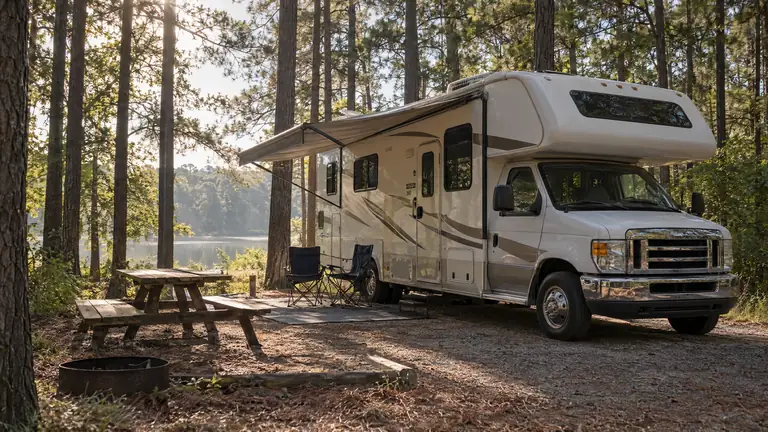 RV typeSell your Class C motorhome in HoustonCab-over motorhomes and Super Cs.Read more
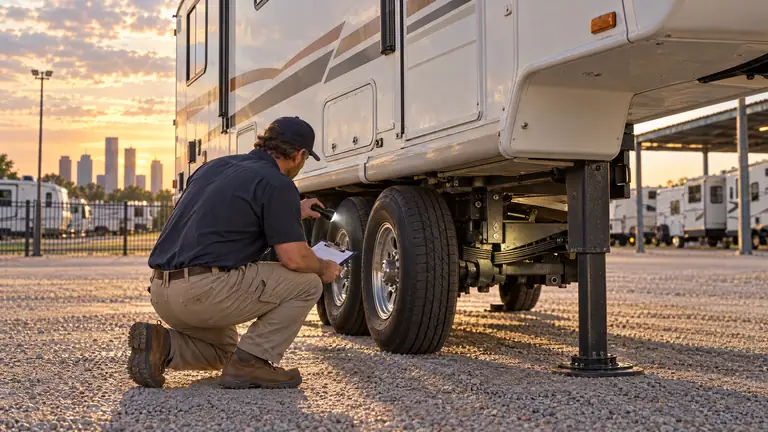 GuideWhat affects an RV cash offer?The 12 factors that move a number up or down.Read more
Ready when you are
Get a real number for your RV, not a listing estimate.
Send a few details and photos. We'll come back with a cash offer, and if it works for you, we handle the paperwork and the pickup.