Signs of RV water damage, and what they mean when you sell
Soft floors, ceiling stains, delamination and musty odors. How to spot RV water damage, why Houston humidity makes it common, and what it means when selling.

RV water damage signs can be easy to miss until a stain spreads, a floor feels soft, or an outside wall starts to ripple. If you’re preparing to sell in Greater Houston, a careful check helps you describe your RV honestly and understand what a buyer may notice.
You don’t need to dismantle your RV to gather useful information. Start with a safe visual inspection, document anything suspicious, and separate what you know from what you suspect. We consider water-damaged RVs at Cash For RV, and clear photos help us evaluate yours without asking you to hide problems or guess at repairs.
The short version
- Look beyond ceiling stains, because leaks can travel inside walls and beneath flooring.
- Soft surfaces, musty odors, and exterior bubbles deserve closer attention.
- A moisture meter helps locate suspicious areas but cannot diagnose damage by itself.
- Disclosing known leaks and previous repairs helps keep your cash offer straightforward.
Where RV leaks commonly start
An RV roof leak often begins around roof seams, vents, skylights, or the air conditioner gasket. Front and rear cap joints are other entry points. Water can travel along framing before appearing inside, so a ceiling stain may not sit directly beneath its source.
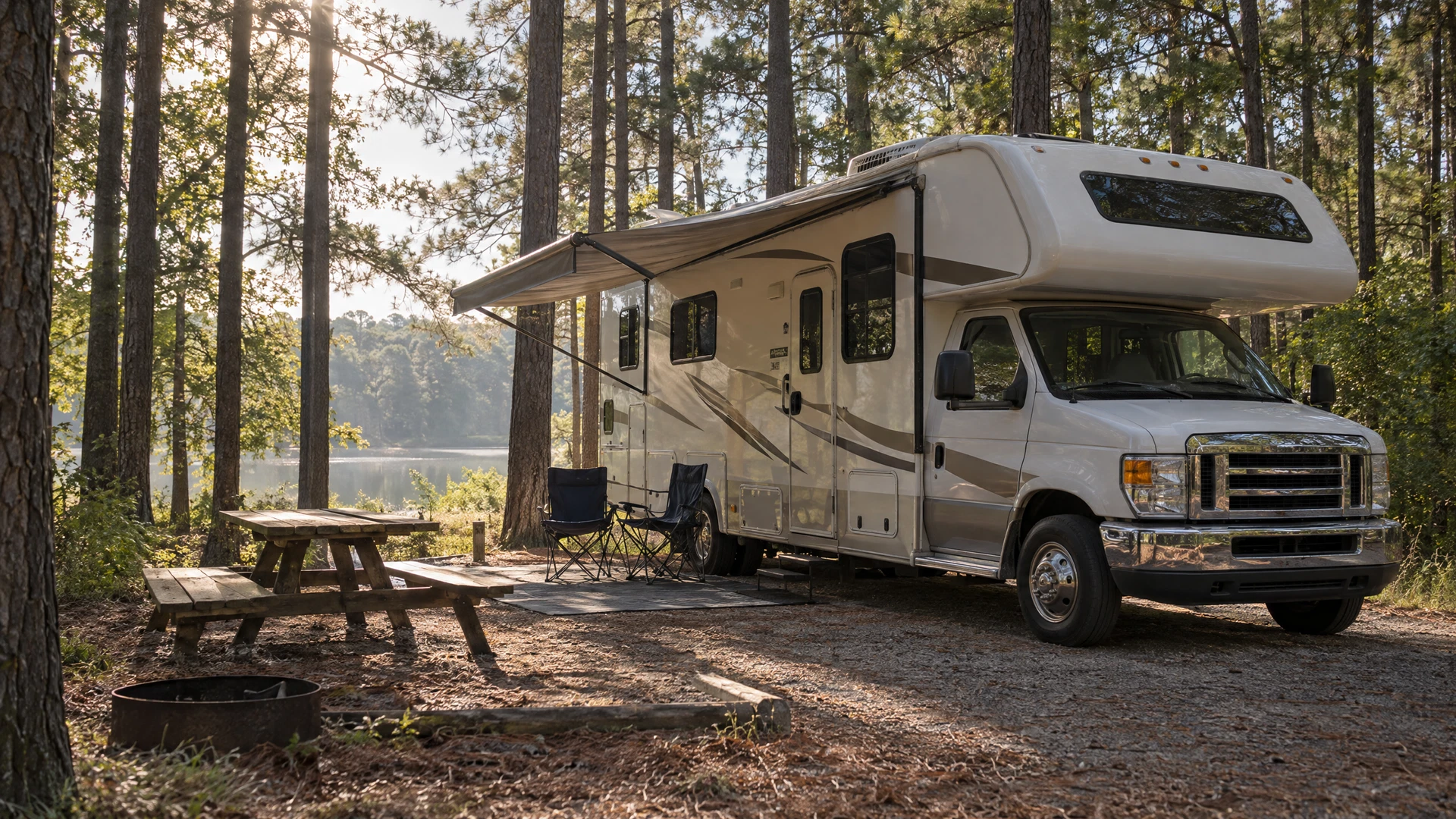
Check window and door frames, slide-out seals, and marker lights, too. Plumbing leaks around supply lines, drains, the toilet, and water heater can wet floors without any rain. On a Class C motorhome, inspect the cab-over corners and underside of the bunk; these details are useful when you sell your Class C motorhome in Houston.
RV water damage signs that deserve a closer look
Some clues are obvious, but others appear only when you open a cabinet or look along a wall at an angle. One sign alone does not establish the extent of damage. Several signs together, especially near a known leak, justify closer evaluation.
- Yellow or brown stains, water rings, or discolored ceiling material.
- Soft spots in the RV floor, walls, or ceiling.
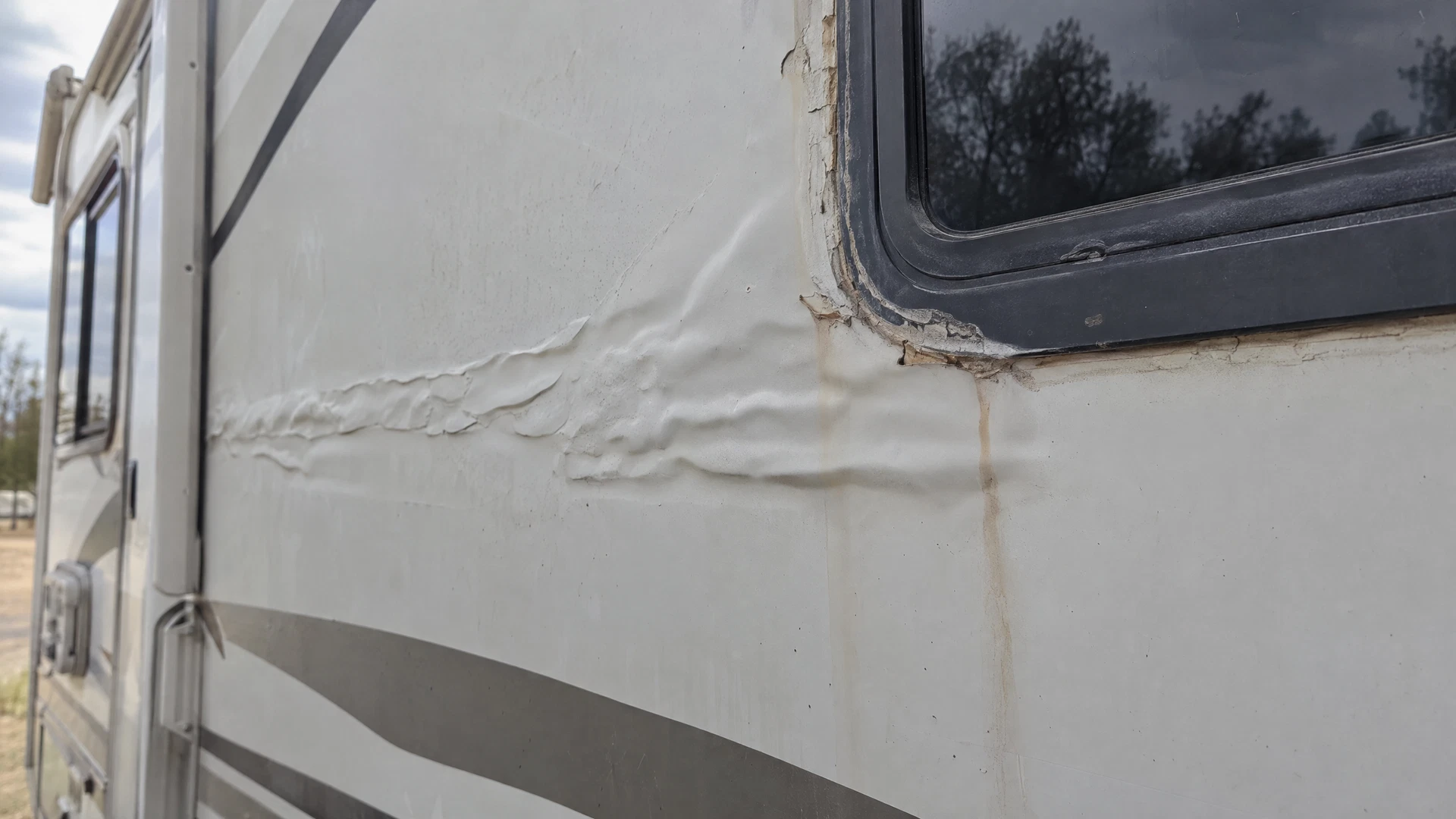
- Bubbles, bulges, or wavy fiberglass on exterior walls.
- Warped paneling, lifted flooring, or separating interior trim.
- Persistent musty smells or visible mold-like growth.
- Rust on screws, fasteners, or metal parts near damp areas.
How to check your RV for water damage safely
Work through the RV systematically, starting with ceilings and upper corners before checking walls and floors. Open cabinets, inspect under sinks, and look inside storage compartments. Check corners behind accessible cushions and around slide-out openings, where stains can remain hidden.
For a gentle press test, apply light hand pressure to accessible wall or ceiling panels and compare them with nearby areas of the same construction. Walk cautiously across the floor, noting unusual give. Don’t push hard, puncture surfaces, or step onto an obviously weakened area.
A moisture meter can help compare suspicious areas with apparently dry areas made from similar material. Readings depend on the meter, surface, and nearby metal, so there is no single reading that proves every RV is dry or damaged. Photograph the location and reading rather than treating the number as a repair diagnosis.
Repeat your visual check after rain, looking for fresh dampness or changed stains. Stay off a questionable roof, avoid wet electrical equipment, and stop if inspection would require disturbing extensive mold-like growth or unstable materials.
Why Houston weather makes regular checks worthwhile
Greater Houston’s humidity can slow drying, while heavy rain exposes openings that a light shower may not reveal. Hot surfaces expand and cool surfaces contract, stressing aging sealant and joints. During long storage periods, a small leak can remain unnoticed through repeated storms.
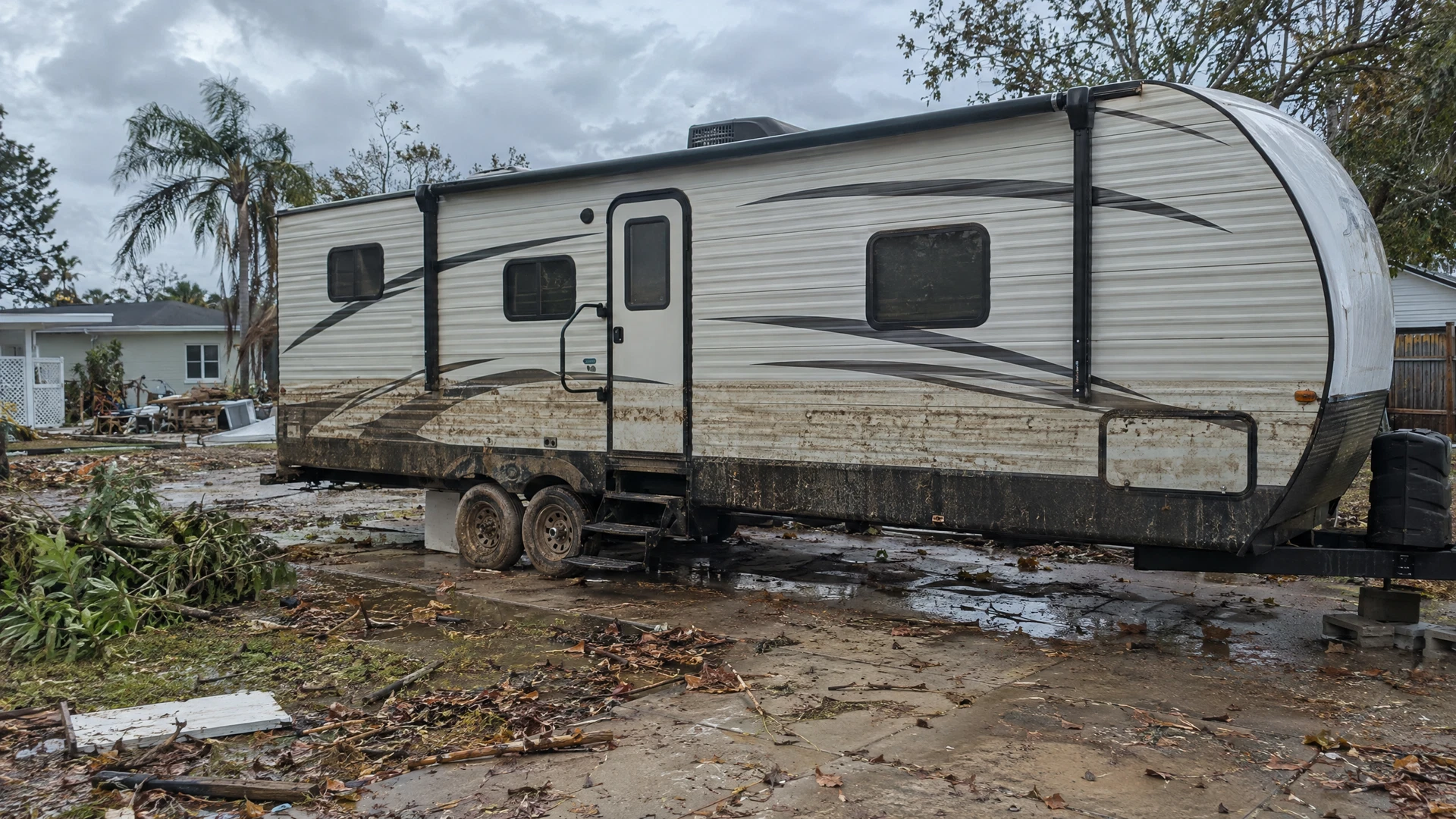
Atlantic hurricane season runs June 1 through November 30. Hurricane Harvey in 2017 and Hurricane Beryl in 2024 caused major regional flooding and damage. If your RV experienced rising water, disclose that separately from a roof leak; our information on selling a flood-damaged RV in Houston explains that selling situation.
What repairs may involve, from sealing to rebuilding
When a leak is caught before underlying materials deteriorate, the work may involve correcting the entry point, drying the affected area, and replacing compatible sealant or a failed gasket. Adding sealant over dirt, loose material, or an unidentified leak is not the same as fixing the problem.
Soft floors or walls may require opening the structure and replacing damaged decking, framing, insulation, or interior panels. RV delamination means bonded layers have separated. Exterior bubbles or wavy fiberglass can suggest it, but they don’t establish the cause or repair scope by themselves.
Stopping the leak does not automatically restore weakened materials. Ask an RV repair professional to assess structural concerns if you need a repair plan. If you prefer not to undertake that work before selling, you can explore selling a damaged RV as-is in Houston.
How water damage affects an RV cash offer
A buyer considers whether moisture is active, how far damage may extend, and whether floors, walls, or attachment points remain sound. Repair uncertainty matters, too: a visible stain may be localized, while a soft floor can suggest work beyond what photographs show.
Age, overall condition, and other mechanical or cosmetic issues also matter. There is no universal deduction for water damage. Our guide to what affects an RV cash offer explains how these factors fit together.
Disclose where you found moisture, when you first noticed it, and whether the leak has been repaired. Include dated repair records if available, plus wide photos and close-ups. Say when you don’t know the cause rather than describing an unverified repair as complete.
Selling a water-damaged RV to Cash For RV
We buy RVs from owners throughout Greater Houston, including clean, worn, damaged, flood-damaged, non-running, and end-of-life units. Every RV type is considered, although some units may not be a fit. Start by sharing details and photos through our online form, by phone, or by text to request a cash offer for your RV.
We review the information and provide an offer, often the same day, then arrange a quick in-person look wherever the RV is in Greater Houston. If its condition matches your description, the offer stands. If we find something significant that wasn’t disclosed, we explain the finding and any price change, and you can walk away.
There are no fees, commissions, or obligations. At signing, we pay by cashier’s check, bank transfer, or cash, handle title paperwork and any lender payoff, then tow or drive the RV away at no cost. See how selling your RV to us works for the full process.
Frequently asked questions
Does a dry moisture-meter reading mean an old leak caused no damage?
No. An area may have dried while weakened wood, separated layers, or staining remains. Meter readings also vary with material, access, and the instrument used. Treat a dry reading as one observation, not proof of sound construction. When selling, disclose the known leak history even if the area currently feels dry.
Should I paint over a water stain before sending photos?
Send photos of the stain before making cosmetic changes. Paint can hide a useful clue without addressing the source or condition underneath. If you already painted or replaced a panel, explain what was covered, why the work was done, and whether anyone checked the underlying materials. Before-and-after photos can help clarify the history.
Can condensation look like a roof leak inside an RV?
Yes. Condensation can create damp surfaces, odors, or mold-like growth, particularly in humid conditions with limited airflow. A roof or plumbing leak can produce similar symptoms, so appearance alone may not identify the source. Note whether moisture follows rain, plumbing use, or temperature changes, and get a professional assessment if the cause remains unclear.
Can I sell a water-damaged RV if I still have a loan?
Yes, a loan does not automatically prevent a sale to us. We can pay your lender directly, and you receive any equity. If the amount owed exceeds our offer, you must cover the difference at closing. We do not make loans. Confirm your current payoff amount and the lender’s payoff requirements before arranging the transaction.
Related pages
 SituationSell a damaged RV as-is in HoustonWater, roof, delamination, hail or wreck damage.Read more
 SituationSell a flood-damaged RV in HoustonStorm and flood-damaged units, including totaled ones.Read more
 GuideWhat affects an RV cash offer?The 12 factors that move a number up or down.Read more
 GuideHow much is my RV worth?Book values, comps, condition and what cash buyers pay.Read more
 RV typeSell your Class C motorhome in HoustonCab-over motorhomes and Super Cs.Read more
 RV typeSell your travel trailer in Houston for cashBumper-pull campers of any length, age or condition.Read more
Ready when you are
Get a real number for your RV, not a listing estimate.
Send a few details and photos. We'll come back with a cash offer, and if it works for you, we handle the paperwork and the pickup.