Class A vs. Class C motorhome: the real differences
Class A vs Class C motorhome: size, chassis, driving, space, towing, upkeep and resale compared, with tips for Houston owners selling either.
Published · By the Cash For RV team, Houston
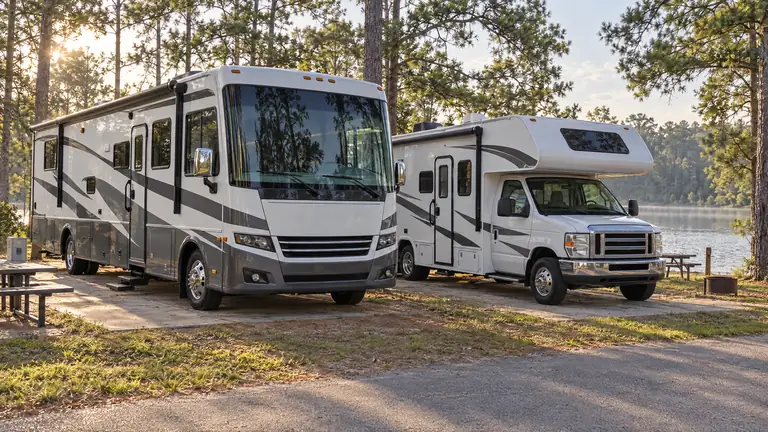
The main difference between a Class A and Class C motorhome is construction: a Class A has an integrated, bus-style body, while a conventional Class C keeps a van- or truck-style cab beneath a raised over-cab area. Class As generally offer more living space and exterior storage; smaller Class Cs often provide easier maneuvering and lower ownership costs. Neither class is automatically better built, more economical or better at holding its value.
A useful Class A vs Class C motorhome comparison starts with the specific rigs, not their silhouettes. Check dimensions, chassis, loaded-weight limits, floorplan and service requirements. For Houston-area owners considering a change, moving between classes is a change in fit, not necessarily an upgrade or downgrade.
The short version
- Class A and Class C describe construction, not a universal quality, safety or durability ranking.
- Actual dimensions and floorplans matter more than the class label for parking, sleeping and daily comfort.
- Fuel, maintenance and towing comparisons must use the specific chassis and completed motorhome’s ratings.
- Texas driver-license requirements follow weight ratings and towing configuration, not the RV’s class name.
- Condition, maintenance records and demand affect resale value for both classes.
| Feature | Class A | Class C |
|---|---|---|
| Living space | Generally more lounge space and residential-style layouts; sleeping arrangements vary. | Cab-over sleeping can preserve floor space; smaller dimensions do not necessarily mean fewer sleeping positions. |
| Driving and parking | Bus-like driving environment; larger examples need more clearance, but compact models exist. | Familiar van/truck-style cab; shorter examples often maneuver more easily, but actual dimensions control. |
| Exterior storage | Generally larger basement and pass-through compartments; verify remaining cargo capacity. | Compartment sizes vary by floorplan; available volume does not establish sufficient payload. |
| Fuel economy | Larger, heavier models generally consume more fuel; compare actual fuel logs. | Smaller, lighter models can improve economy; similar-size rigs can overlap. |
| Maintenance and service | Gasoline and diesel platforms have different requirements; confirm local shop capability and actual engine access. | Conventional gasoline chassis offer broad service options; Sprinter and Super C platforms may need more specialized service. |
| Towing a car | Often greater capacity, but completed-coach ratings and loaded weight determine the limit. | Many can tow suitable cars; hitch ratings alone are insufficient, and Super C capability differs. |
| Construction | Integrated bus-style coach body, not necessarily a converted passenger bus. | Conventional models retain a van/truck cab, commonly beneath a raised sleeping or storage area. |
| Chassis and fuel | Ford F-53 gasoline and Freightliner diesel platforms are examples; chassis choice is model-specific. | Ford and Chevrolet gasoline cutaways and Sprinter diesels are examples; Super Cs use heavier truck platforms. |
| Size overlap | Often larger, but compact models can overlap conventional Class C dimensions. | Often shorter, but long conventional models and Super Cs overlap Class A sizes. |
| New-price considerations | Compact gasoline models and larger diesels occupy different price levels; manufacturer MSRP is not a transaction price. | Conventional models may offer lower entry prices; premium diesel and Super C models overlap Class A pricing. |
| Resale expectations | Original price does not guarantee stronger retained value; condition, model, mileage and demand matter. | No automatic resale advantage; upkeep records, water damage, age and demand affect value. |
| Extended use | Often suits owners prioritizing spacious living and bulky storage who accept the specific coach’s operating requirements. | Can suit extended use when the floorplan, storage and cargo capacity support daily needs. |
| Typical owner priorities | Living room, exterior storage and extended stays. | Familiar cab, flexible sleeping arrangements and a potentially smaller footprint. |
| Texas licensing | The RV label does not determine license class; check rated vehicle and combination weights with Texas DPS. | The RV label does not guarantee a standard license suffices; heavier Super Cs and combinations require particular attention. |
How are Class A vs Class C motorhomes built?
Class A motorhomes use an integrated coach body, while conventional Class Cs retain a recognizable driving cab on a van or cutaway-truck chassis. A Class A’s bus-like appearance does not mean it began as a passenger bus. The raised area over a Class C’s cab commonly contains a bunk, but THOR Industries notes that designs can use that space differently.
Chassis and fuel choices vary within both classes. Winnebago identifies the Ford F-53 beneath its gasoline Adventurer, while Thor Motor Coach lists Freightliner-based diesel Class As. Conventional gasoline Class C examples include Ford E-350/E-450 and Chevrolet Express 3500/4500 cutaways, with availability depending on manufacturer and model year; Mercedes-Benz Sprinter platforms provide diesel alternatives.
Super Cs use heavier truck platforms, including Freightliner S2RV/M2 configurations, rather than simply extending a conventional Class C. They can provide substantially greater carrying and towing capacity, but are not automatically off-road vehicles. Our Super C and Class A diesel pusher comparison explains that heavier-platform distinction.
Which has more usable living space and storage?
Class As generally provide more living room and basement storage, but the floorplan and weight limits determine how useful that space is. THOR Industries describes larger exterior and pass-through compartments as common Class A advantages. A particular Class C may still have the better bed arrangement, bathroom or accessible storage for your needs.
Size overlaps between classes. Thor Motor Coach lists its 2027 Four Winds Class C examples from 20 feet 5 inches to 32 feet 8 inches, while its 2027 Hurricane gasoline Class As range from 30 feet 11 inches to 38 feet 3 inches. These are model-line examples, not boundaries for either class.
Sleeping capacity also overlaps: a Class C’s cab-over bunk can preserve floor space, while some Class As have drop-down cockpit beds. Check the actual bathroom layout rather than assuming either class always has a separate shower. Forest River emphasizes that cargo capacity is measured by weight, not compartment volume, so empty storage does not prove you can safely fill it.
Is a Class A or Class C easier to drive in Texas?
A shorter Class C can be easier to maneuver, but actual dimensions and chassis behavior matter more than the class name. The familiar cab may help you feel comfortable; it does not erase the coach’s width, height or rear overhang. Compare visibility, seating, wheelbase and turning clearance during a test drive.
Before choosing either, measure your Houston-area storage space and its entrance, not just the marked parking bay. A compact Class A may fit where a long Class C will not. If maneuverability is your priority, our Class B versus Class C guide also explains the smaller camper-van alternative.
Texas DPS lists personally used recreational vehicles as CDL-exempt, but that does not exempt you from the appropriate noncommercial license. Texas DPS specifies noncommercial Class B for a single vehicle with GVWR of 26,001 pounds or more, including that vehicle towing another whose GVWR does not exceed 10,000 pounds.
Texas DPS specifies noncommercial Class A for a combination with GCWR of 26,001 pounds or more when the towed vehicle’s GVWR exceeds 10,000 pounds. RV Class A and driver-license Class A are different systems. Check the ratings and confirm your particular configuration with Texas DPS.
Which motorhome uses less fuel?
A smaller, lighter Class C can use less fuel than a larger Class A, but switching classes does not guarantee savings. Size, loaded weight, fuel type, speed, wind, terrain, tire pressure and maintenance all affect consumption. Comparable rigs can overlap.
For a meaningful Class A vs Class C gas mileage comparison, ask for actual fuel logs from the motorhomes you are considering. Check whether those trips involved towing and similar loads. A broad editorial mileage range is a planning estimate, not a standardized test of your exact coach.
Separate construction from powertrain: a gasoline Class A, diesel pusher, gasoline Class C and Sprinter-based diesel have different operating considerations. Our diesel pusher versus gasoline motorhome guide covers that additional decision.
How do Class A vs Class C maintenance costs compare?
Maintenance costs depend on the chassis, engine, coach systems and condition, so neither class has a universal annual-cost advantage. A gasoline Class A should not be budgeted as though it were a large diesel pusher. Likewise, a Sprinter or heavy Super C can have different service needs from a conventional gasoline Class C.
THOR Industries notes that Class C chassis and engine service is available at many automotive dealerships. Familiar Ford and Chevrolet platforms can offer broad service options, but not every shop can accommodate the completed motorhome’s height, length or weight. Confirm local service access before committing to a particular rig.
Request a maintenance schedule and a model-specific estimate from a facility able to service the coach. Include engine and chassis work alongside generator, roof, seals, slides and appliance upkeep. Inspect the actual engine access points rather than assuming a conventional cab makes every repair easy.
Can you tow a car with a Class C motorhome?
Both Class A and Class C motorhomes can tow a suitable second vehicle, but the completed coach’s ratings determine the limit. Class As often offer greater capacity, while conventional Class C and Super C capabilities differ materially.
Forest River lists a 5,000-pound hitch for Sunseeker E-350 configurations and a 7,500-pound hitch for E-450 configurations. Those are manufacturer hitch examples, not promises of available towing capacity after you load the motorhome.
Forest River defines GCWR as the maximum permissible loaded weight of the motorhome and its towed vehicle or trailer together. Check the completed vehicle’s labels and manuals, loaded coach weight, axle limits, hitch rating and appropriate braking. Separately confirm the car manufacturer’s towing instructions; being light enough does not establish that a car can be flat-towed.
Purchase price and resale value overlap between classes
Class Cs can have a lower entry price, but premium Class Cs and Super Cs overlap Class A pricing. Thor Motor Coach advertises its 2027 Four Winds from $123,060 MSRP and compact Axis/Vegas Class As at $167,860 MSRP. Its listed Tiburon Class C is $226,940 MSRP, while listed Super C examples reach $400,960 MSRP.
These are manufacturer examples, not transaction prices or an all-market price range. Compare specific equipment and chassis rather than treating the class name as a budget category. For ownership planning, add fuel, storage, insurance quotes and model-specific service needs.
There is no universal Class A vs Class C resale value winner. One RV valuation guide identifies model, age, features, mileage, condition and demand as important factors, and recommends mileage-linked maintenance records. Leaks, water damage and roof problems can materially reduce value; our guide to motorhome mileage explains why mileage needs context.
Retail estimates, wholesale values and direct cash offers describe different transactions. A high original MSRP does not establish today’s value, and an online retail estimate is not a guaranteed acquisition offer.
Who does each motorhome type suit best?
Class A generally suits owners prioritizing living room and bulk storage, while Class C often suits owners prioritizing a familiar cab, flexible sleeping arrangements and a smaller footprint. These are tendencies, not restrictions. Either class can work for extended travel when its floorplan, capacity and costs fit your needs.
For Class A vs Class C for full time living, inspect daily usability rather than counting beds alone. Consider seating comfort, bathroom layout, clothing storage, kitchen access and how much cargo capacity remains for your belongings. A smaller coach that supports your routines can be a better fit than a larger one with an awkward layout.
Choose based on the specific motorhome’s trade-offs:
- Favor a Class A when living space and exterior storage justify its actual size and operating requirements.
- Favor a conventional Class C when its cab, dimensions and sleeping layout suit your driving comfort and budget.
- Consider a Super C when heavier carrying or towing needs justify a truck-based platform and its service requirements.
Selling either motorhome in Greater Houston
We buy both Class A and Class C motorhomes in Greater Houston, including gas, diesel and Super C models. If changing size or travel plans means selling your current coach, our pages for selling a Class A motorhome and selling a Class C motorhome explain those options.
Share the year, make, model, floorplan, chassis, fuel type, mileage and photos, plus maintenance records, working systems and known leaks or damage. We consider clean, worn, damaged and non-running units, though some may not fit.
You can request a cash offer without fees, commissions or obligation. We review the details, inspect the RV where it sits, then pay at signing and handle title paperwork, any lender payoff and removal at no cost. If the inspection matches your description, the offer stands. We only buy RVs; we do not supply replacement motorhomes.
Frequently asked questions
What are the benefits of a Class A besides interior space?
Larger basement compartments and pass-through storage are common Class A advantages, and some models provide greater towing capacity. Those benefits are model-specific, not automatic. Check compartment access, cargo carrying capacity and completed-coach towing ratings. A large storage bay is only useful if the RV has enough remaining payload for what you intend to carry.
Does a long rear overhang cause problems on a Class C?
Rear overhang can affect maneuvering and the way a motorhome feels, but it should be considered alongside wheelbase, loading and weight distribution. During a test drive, pay attention to rear clearance and how the coach moves through turns. Compare the actual floorplans rather than assuming every motorhome on the same chassis handles alike.
What should I budget for annual diesel motorhome maintenance?
Use the exact engine, chassis and coach maintenance schedules to request a service estimate rather than relying on a universal annual figure. A Sprinter-based Class C, heavy Super C and Class A diesel pusher have different requirements. Ask which tasks are due by time or mileage, and distinguish scheduled maintenance from repairs or overdue work.
Would a Class C be cheaper to run than a similarly sized Class A?
Possibly, but similar length alone does not establish lower operating costs. Compare loaded weight, engine, fuel type, actual fuel logs and local service access. Obtain estimates for upcoming maintenance on both rigs. A well-maintained gasoline Class A may be a different ownership proposition from a similarly sized diesel Class C needing deferred service.
Can a Class C work for extended stays or full-time living?
Yes, a suitable Class C floorplan can support extended use. Check comfortable seating, bed access, bathroom layout and practical storage rather than assuming that more sleeping positions mean better daily living. Confirm cargo capacity for your belongings and whether the dimensions and service requirements fit your plans. A cab-over bunk may be useful space, but it is not mandatory in every design.
Do maintenance records help either class hold its resale value?
Maintenance records help show how the motorhome was cared for, especially when entries connect service to mileage. They do not guarantee a particular resale price or erase existing damage. Keep chassis and coach records together, disclose known problems and distinguish completed repairs from unresolved issues. Model, age, condition and buyer demand still affect the result.
Sources
- Texas DPS: Classes of driver licenses
- Texas DPS: CDL-exempt drivers
- THOR Industries: Drivable RV motorhomes
- Thor Motor Coach: Four Winds
- Thor Motor Coach: Hurricane
- Thor Motor Coach: Class A motorhomes
- Thor Motor Coach: Class C motorhomes
- Forest River: Sunseeker ratings and specifications
- Let's RV: Class C chassis differences
- Good Sam: How much is your RV worth?
Related pages
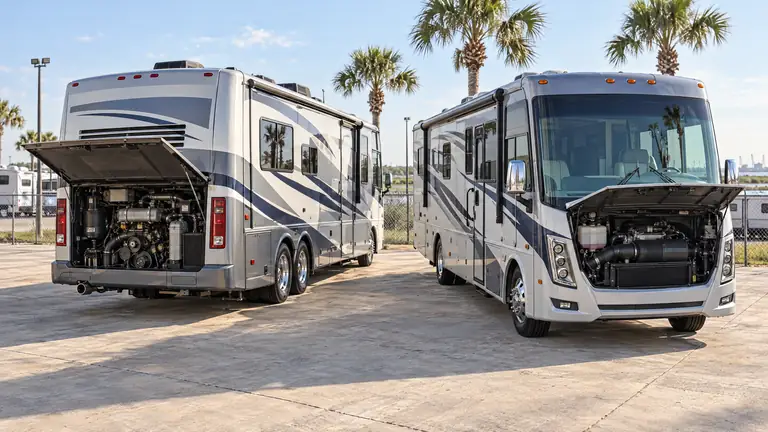 GuideDiesel pusher vs. gas motorhome: how they really compareEngine, chassis, ride, upkeep and resale side by side.Read more
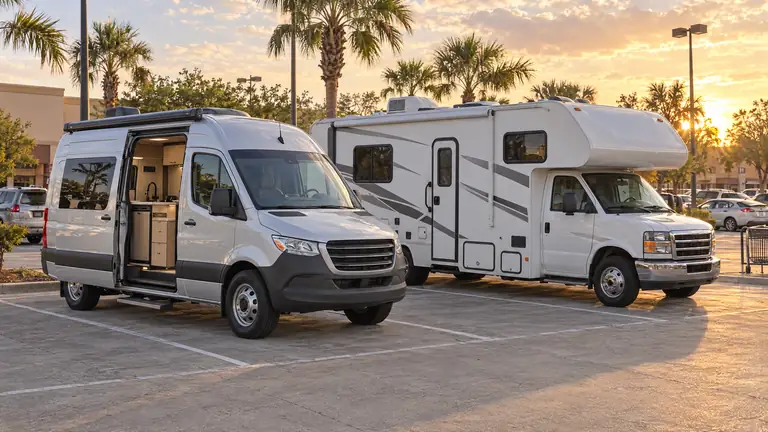 GuideClass B vs. Class C motorhome: camper van or Class C?Camper van vs Class C: size, bathrooms and parking.Read more
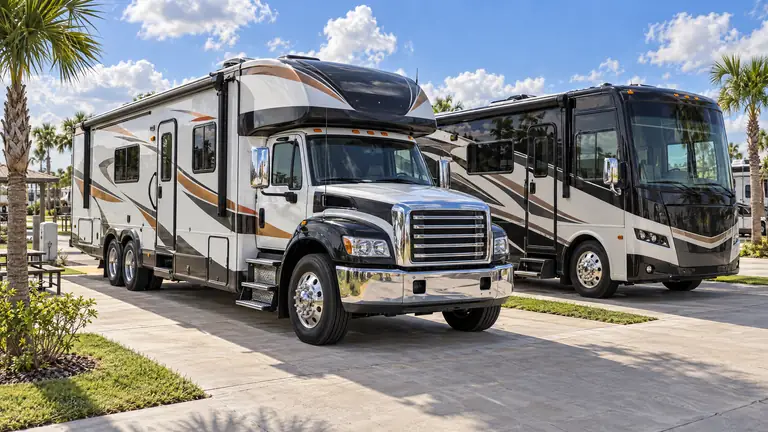 GuideSuper C vs. Class A diesel pusher: which heavy hauler fits?Truck-chassis Super C vs diesel pusher compared.Read more
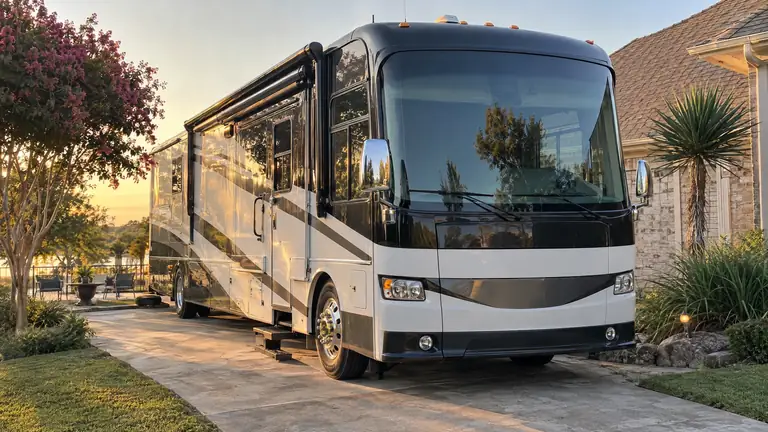 RV typeSell your Class A motorhome in HoustonGas coaches and diesel pushers, running or not.Read more
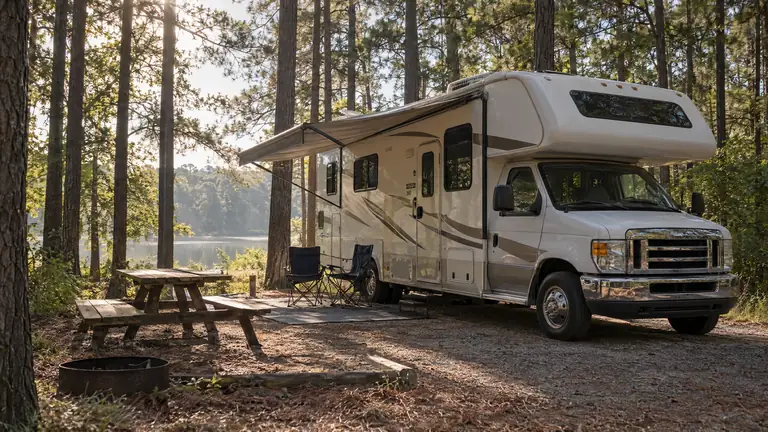 RV typeSell your Class C motorhome in HoustonCab-over motorhomes and Super Cs.Read more
 GuideHow many miles is a lot for a motorhome?Engine life, generator hours and low-mile risks.Read more
Ready when you are
Get a real number for your RV, not a listing estimate.
Send a few details and photos. We'll come back with a cash offer, and if it works for you, we handle the paperwork and the pickup.