Class B vs. Class C motorhome: camper van or Class C?
Class B camper van vs Class C motorhome: size, parking, bathrooms, sleeping space, fuel use and resale compared. Houston owners: we buy both.
Published · By the Cash For RV team, Houston
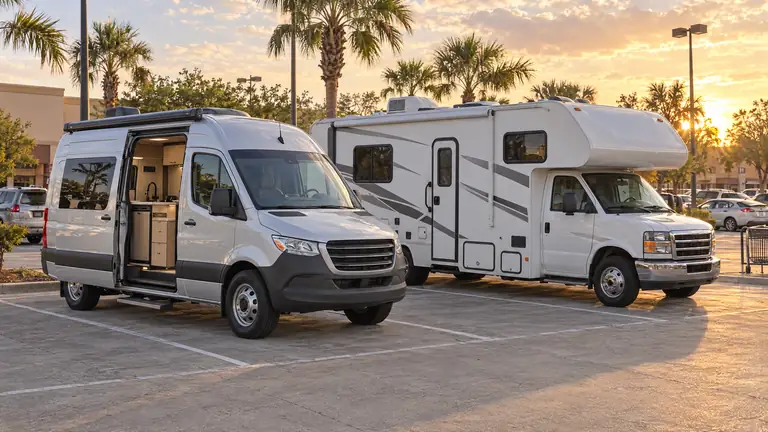
The main difference in a Class B vs. Class C motorhome comparison is construction: a Class B keeps its living space inside a van body, while a Class C adds a wider coach body behind an automotive cab. Choose the van-sized footprint when everyday mobility matters most; consider a Class C when bathroom space, sleeping options and interior room matter more.
Neither category guarantees better fuel economy, a lower purchase price or stronger resale. Compare the exact floorplan, chassis and dimensions, not just the badge. A Mercedes-Benz Sprinter can underpin either category, and a motorhome advertised as Class B+ may actually be a streamlined small Class C.
The short version
- Class B means van-body construction, not simply a short motorhome or a Sprinter chassis.
- Class C usually offers more room, but compact models deserve a look alongside camper vans.
- Check actual bathroom layouts, beds, belted seats and tank capacities before choosing.
- Fuel economy, purchase cost and resale depend on the individual motorhome, not its category alone.
- We buy both Class B camper vans and Class C motorhomes from owners in Greater Houston.
| Feature | Class B | Class C |
|---|---|---|
| Best fit | Often suits owners prioritizing van-sized mobility and compact living space; full-time use is possible. | Often suits owners prioritizing interior room, more sleeping choices and a separate shower. |
| Construction | Living accommodations fitted inside a van body. | Wider coach body added behind an automotive cab, often with cabover sleeping space. |
| Parking | Generally easier for errands, but actual dimensions, accessories and clearances determine where it fits. | Wider body calls for more deliberate turning and parking; compact examples remain an option. |
| Example dimensions | Winnebago Travato: 21 feet long, 6 feet 9 inches wide, 9 feet 4 inches high. | Winnebago Minnie Winnie: 23 feet 10 inches–32 feet 9 inches long, 8 feet 5.5 inches wide, 11 feet high. |
| Bathroom | Wet baths, dry baths and portable-toilet arrangements vary by floorplan. | Separate showers are common; inspect the individual bathroom layout. |
| Sleeping capacity | Go RVing: typically two to four; Winnebago Travato: up to two. Verify belted seats separately. | Winnebago Minnie Winnie: advertised sleeping for five to eight. Verify belted seats separately. |
| Tank examples | Winnebago Travato: 18 gallons fresh, 11–12 black, 12–14 gray. | Winnebago Minnie Winnie: 40–44 gallons fresh, 21–40 black, 24–45 gray. |
| Fuel economy | Thor guidance: mid-to-high teens mpg, affected by terrain and upfitting; not guaranteed. | Marketplace reports: gas models may fall below 10 mpg; some efficient diesels reportedly reach 17–18 mpg. |
| Published starting price | Winnebago Travato: $183,783 MSRP at November 3, 2026 check, excluding additional charges. | Winnebago Minnie Winnie: $146,248 MSRP at November 3, 2026 check; dealer-stock-only, excluding additional charges. |
| Chassis examples | Thor offers Ford Transit, Ram ProMaster and Mercedes-Benz Sprinter platforms; availability varies by model and year. | Compact examples include Sprinter-based Winnebago View/Navion and Transit-based Leisure Travel Vans Wonder. |
| B+ terminology | A true van-body Class B is not automatically equivalent to a motorhome advertised as B+. | B+ commonly describes a streamlined small Class C; Gulf Stream’s example replaces the extended cabover bunk with entertainment/storage space. |
| Storage | Compact, multipurpose layouts require checking gear access with beds in use. | Winnebago Minnie Winnie lists approximately 45–108 cubic feet of exterior storage, depending on floorplan. |
| Hitch examples | Winnebago Travato: 3,500-pound drawbar, 350-pound tongue rating; loaded weights and other ratings limit usable towing. | Winnebago Minnie Winnie: 7,500-pound drawbar, 500-pound tongue rating; loaded weights and other ratings limit usable towing. |
| Resale | Value the exact model, year and condition; compact size does not guarantee a resale premium. | Family-oriented space serves a different use case, not proof of weaker resale. |
What defines a Class B vs. Class C motorhome, and where does B+ fit?
A traditional Class B uses the van’s body for its living accommodations, while a Class C has an added coach body. Thor Motor Coach emphasizes that construction distinction; Go RVing describes the Class C’s characteristic cabover area, which often provides a bed. Slide-outs are common on Class Cs but are not required.
Thor’s Class B lineup includes Ford Transit-based Talavera and Palladium, Ram ProMaster-based Rize, Scope, Tellaro and Sequence, and Mercedes-Benz Sprinter-based Sanctuary and Tranquility. Check the model year for the available platform and drivetrain.
Sprinter does not automatically mean camper van. Winnebago View and Navion and Tiffin Wayfarer are examples of Sprinter-based Class Cs; Leisure Travel Vans Wonder uses Ford Transit-based construction.
Class B+ is not a standardized van-size category. Gulf Stream describes its B+ BT Cruiser as an undersized Class C, with a modified cabover area for entertainment or storage rather than the extended bunk. For Class B plus vs. Class C comparisons, inspect the body construction and layout rather than relying on the marketing label.
Can you park and run everyday errands without another car?
A Class B generally makes urban errands easier, but neither category guarantees convenient parking at every destination. Thor gives roughly 17–24 feet as a Class B shopping range; Go RVing’s approximately 25–35-foot Class C overview has shorter exceptions.
Winnebago lists the Travato at 21 feet long, 6 feet 9 inches wide and 9 feet 4 inches high. Its Minnie Winnie floorplans measure 23 feet 10 inches to 32 feet 9 inches long, 8 feet 5.5 inches wide and 11 feet high. The body-width difference matters when turning, passing parked vehicles and positioning the coach.
For Class B motorhome parking, measure your actual Houston driveway or storage bay and check posted overhead clearances. Include mirrors and accessories. A van may still extend beyond a parking stall, and neither example should be assumed to fit a residential garage.
A compact Class C can work without a towed car if you accept more deliberate parking choices. Before choosing a Class B or small Class C, consider the grocery stores, restaurants and other destinations you actually use.
Do Class B motorhomes have usable bathrooms?
Many Class B motorhomes have bathrooms, but the equipment and usable space vary by floorplan. Go RVing identifies wet baths, dry baths and portable-toilet arrangements, so a camper van should not automatically be assumed to have a full bathroom.
Thor identifies wet baths in Sequence and Tellaro models. In a wet bath, the shower and toilet share an enclosure designed to get damp during showering. Check standing room, door access and the toilet’s waste-handling system rather than judging from a floorplan drawing alone.
Class Cs commonly offer a dry bathroom with a separate shower. Winnebago lists Minnie Winnie showers ranging from 23 by 34 inches to 26 by 38 inches, depending on layout. That separation can make the bathroom more comfortable, but inspect the exact coach for yourself.
Sleeping space, storage and off-grid capacity
Class Cs often provide more sleeping choices and larger tanks, while Class Bs make more intensive use of a narrow interior. Go RVing gives typical Class B sleeping capacity as two to four, but Winnebago’s Travato page specifies sleeping for up to two.
Winnebago advertises Minnie Winnie sleeping capacity of five to eight, with bunk beds in the 31H and other layouts combining permanent beds with convertible areas. Sleeping capacity is not belted travel-seat capacity. Check both separately, along with privacy and whether making a bed blocks other functions.
Winnebago lists Travato fresh-water capacity at 18 gallons, black tanks at 11–12 gallons and gray tanks at 12–14 gallons. Minnie Winnie specifications list 40–44 gallons fresh, 21–40 gallons black and 24–45 gallons gray. Those are model examples, not category limits or a promise of particular off-grid duration.
Check installed batteries, charging equipment, inverter capability and the equipment needed to operate appliances away from hookups. Also inspect storage access with beds in use; Winnebago lists approximately 45–108 cubic feet of Minnie Winnie exterior storage, depending on floorplan.
How do fuel economy and maintenance compare?
Class B RV gas mileage often benefits from a smaller body, but compact diesel Class C results can overlap van estimates. Thor gives broad Class B guidance in the mid-to-high teens mpg and notes that terrain and upfitting affect the result. This is manufacturer guidance, not a guaranteed rating.
One RV marketplace’s reviewer reports that a gas Class C may not reach 10 mpg, while some efficient diesel Class Cs have community-reported results as high as 17–18 mpg. Those reports are not controlled-test averages. Class C motorhome fuel economy needs to be assessed by chassis, body and loading.
For a Sprinter vs. Ford Class C motorhome comparison, ask service facilities whether they accept the specific chassis and completed coach. Do not assume every automotive workshop can accommodate its height, weight or equipment.
Maintenance includes both the vehicle and the living systems: service records, tires, leaks, plumbing, electrical equipment and any slides deserve attention. Our guide to motorhome mileage and condition explains why the odometer should not be your only yardstick.
Towing limits and Texas driver-license requirements
Towing capability and Texas license requirements depend on actual ratings, not whether the RV is called Class B or Class C. Winnebago lists a Travato drawbar hitch rating of 3,500 pounds and maximum tongue weight of 350 pounds; Minnie Winnie lists 7,500 pounds and 500 pounds respectively. Neither hitch rating is an unconditional loaded towing allowance.
Check loaded vehicle weight, gross vehicle weight rating, gross combination weight rating and tongue weight before selecting a towed vehicle. Confirm the applicable limits for the particular motorhome and towing setup.
Texas DPS exempts personal-use RV operators from a CDL, but some still need a noncommercial Class A or B license. DPS sets the single-vehicle Class B threshold at a GVWR of 26,001 pounds or more; its Class A criteria address qualifying combinations, including a towed vehicle over 10,000 pounds GVWR.
An RV called a Class B does not require a Texas Class B license because of its name. Confirm your vehicle and any towing combination with Texas DPS, especially for heavier truck-based Class Cs.
Is a camper van cheaper, and will it hold value better?
A smaller camper van is not necessarily cheaper, and neither category has a guaranteed resale advantage. At the November 3, 2026 check, Winnebago displayed starting MSRPs of $183,783 for Travato and $146,248 for Minnie Winnie, which was marked dealer-stock-only.
Winnebago’s prices exclude additional charges such as freight, taxes, title, license and dealer preparation, and can change. These examples show that a Class B can cost more despite being smaller; they are not a same-model-year transaction-price comparison.
For used value, use the exact model and year in J.D. Power’s RV lookup, then consider relevant current comparables and an inspection. A published MSRP or retail asking price is not guaranteed seller proceeds, and a high original camper-van price does not establish a proportionately high cash offer.
Our guide to estimating your RV’s value can help you separate reference prices from an offer for your particular unit.
Who does each motorhome suit best?
A Class B often suits owners prioritizing mobility, while a Class C often suits owners prioritizing room and separate living functions. Go RVing identifies solo travelers and couples as common Class B users, but the right choice depends on how you use the space.
Choose a van if its actual bed, bathroom and storage arrangement work for you without constant compromises. Thor says full-time Class B use is possible, with limited space an important consideration.
Consider a Class C if you want more sleeping choices, a separate shower or easier separation between occupants. A compact Class C can be the middle ground, particularly when you want more interior width without choosing a much longer coach.
If your comparison is expanding beyond vans and compact coaches, our Class A vs. Class C guide explains the next set of construction and size trade-offs.
- Try the bed arrangement and confirm access to the bathroom and storage.
- Check usable space with any slide-outs retracted.
- Match travel seats to passengers, not advertised sleeping capacity.
- Measure the parking and storage spaces you expect to use.
Selling either motorhome in Greater Houston
We buy both Class B camper vans and Class C motorhomes from owners in Greater Houston. For a camper van sale, share the chassis, floorplan, mileage and installed systems; for a Class C motorhome sale, include cabover, roof, slide and storage photos where applicable.
Tell us about service history, alterations, working equipment and known damage. We consider clean, worn, damaged, flood-damaged and non-running units, although some are not a fit.
You can request a cash offer with details and photos. We review, often offer the same day, then arrange an in-person look wherever the RV is in Greater Houston. If it matches your description, the offer stands; significant undisclosed issues may change it, and you can decline. At signing, we pay, handle title paperwork and any lender payoff, and remove the RV at no cost. There are no fees, commissions or obligation.
Frequently asked questions
Which Class B RV should I consider if I need sleeping space for four?
Look for an exact floorplan explicitly specifying sleeping for four, then examine how each bed is created. Go RVing’s typical Class B range is two to four, but Winnebago specifies Travato sleeping for up to two. Convertible seating and loft arrangements can change the layout substantially. Separately confirm suitable belted travel seats for every passenger.
Can I find a small Class C without a slide-out?
Yes, slide-outs are not a defining requirement of Class C construction. Check the individual floorplan rather than assuming every compact coach has one. If a model does have slides, inspect it with them retracted and confirm whether you can use the bed, reach the bathroom and open essential storage. A floorplan drawing alone may not answer those access questions.
Should Sprinter service availability rule out a camper van?
Not automatically, but verify service access before choosing the vehicle. Contact facilities near your home and places you expect to travel, and ask whether they work on the exact Sprinter chassis and can accommodate the completed RV. Apply the same test to Ford-based coaches. Chassis service and repairs to the living systems may require different facilities.
Will I regret choosing a Class C for driving around Houston?
That depends on your regular destinations and tolerance for planning parking. A compact Class C may suit you well if room matters more than close-in parking. If you expect frequent errands in constrained lots, a van’s narrower footprint may be preferable. Compare actual dimensions against your driveway, storage location and destination clearances rather than deciding from the category name.
Can I sell my Class B or Class C to you while it still has a loan?
Yes, we can pay the lender directly when buying your motorhome in Greater Houston, and you receive any equity. If the loan balance exceeds our offer, you must cover the difference at closing; we do not make loans. Share your lender information early so the payoff can be confirmed. Ask the lender about its payoff and title-release requirements.
Sources
- Texas DPS: Classes of driver licenses
- Thor Motor Coach: Class B questions answered
- Winnebago: Travato specifications
- Winnebago: Minnie Winnie specifications
- Winnebago: Travato product and starting MSRP
- Winnebago: Minnie Winnie product and starting MSRP
- Gulf Stream Coach: Class B, B+ and Class C construction
- Go RVing: Class B motorhomes
- RV Trader: Fuel-efficient Class C examples
- J.D. Power: RV pricing and used values
Related pages
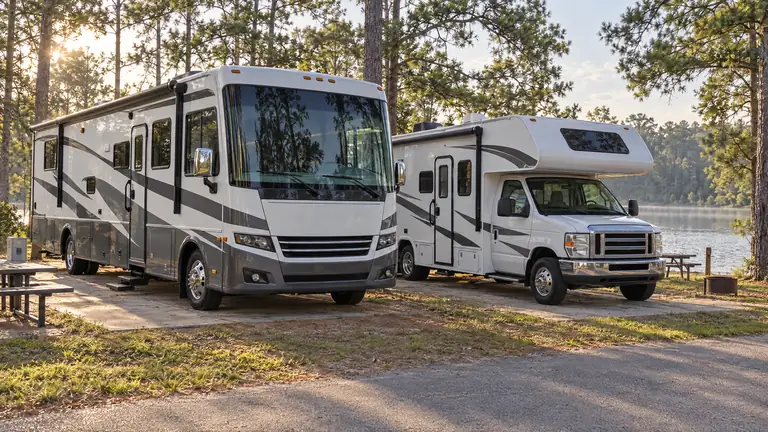 GuideClass A vs. Class C motorhome: the real differencesSize, chassis, driving and upkeep compared.Read more
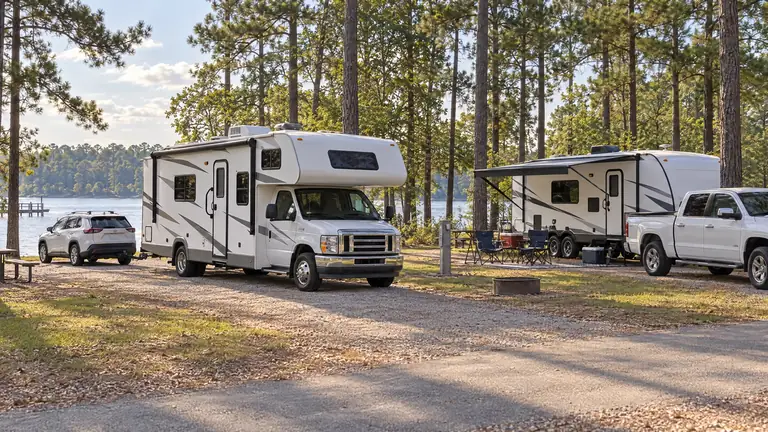 GuideMotorhome vs. travel trailer: comparing the full pictureDrivable vs towable: cost, convenience and upkeep.Read more
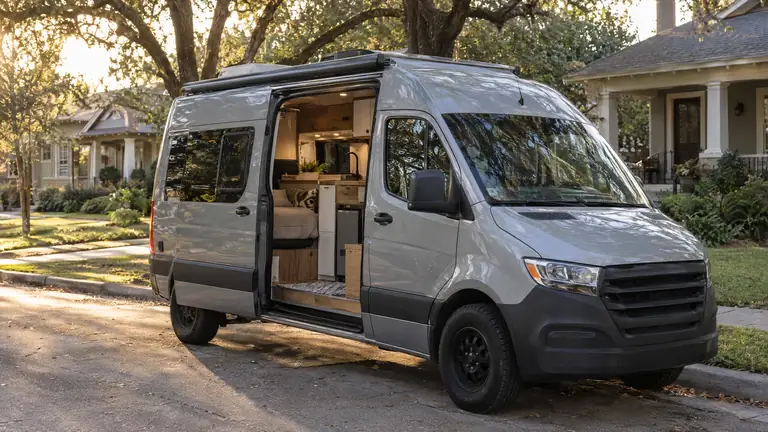 RV typeSell your camper van in HoustonClass B vans and professional conversions.Read more
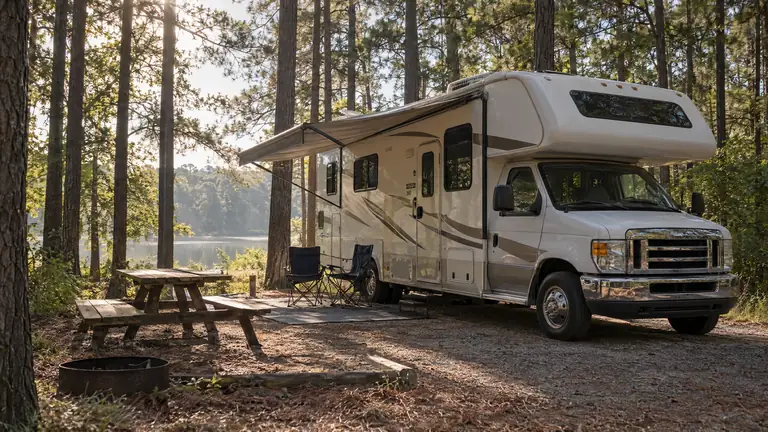 RV typeSell your Class C motorhome in HoustonCab-over motorhomes and Super Cs.Read more
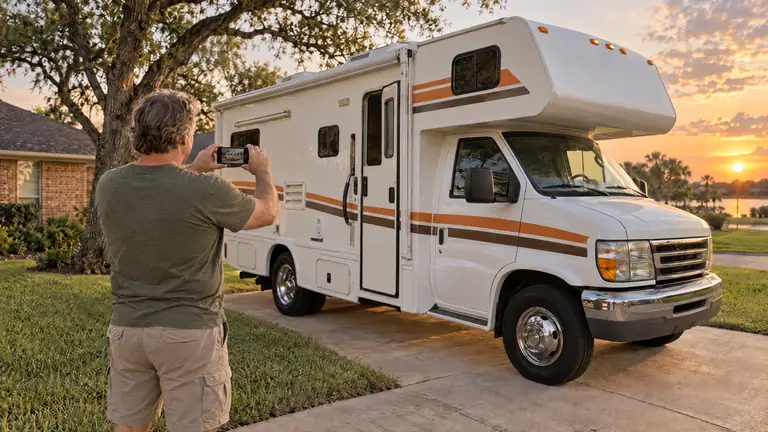 GuideHow much is my RV worth?Book values, comps, condition and what cash buyers pay.Read more
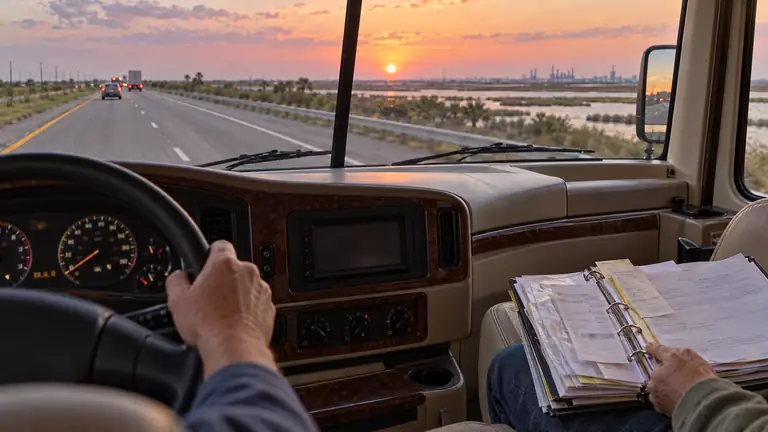 GuideHow many miles is a lot for a motorhome?Engine life, generator hours and low-mile risks.Read more
Ready when you are
Get a real number for your RV, not a listing estimate.
Send a few details and photos. We'll come back with a cash offer, and if it works for you, we handle the paperwork and the pickup.