Motorhome vs. travel trailer: comparing the full picture
Motorhome vs travel trailer: full ownership costs, convenience, towing, upkeep, Texas registration and inspection, and resale compared.
Published · By the Cash For RV team, Houston
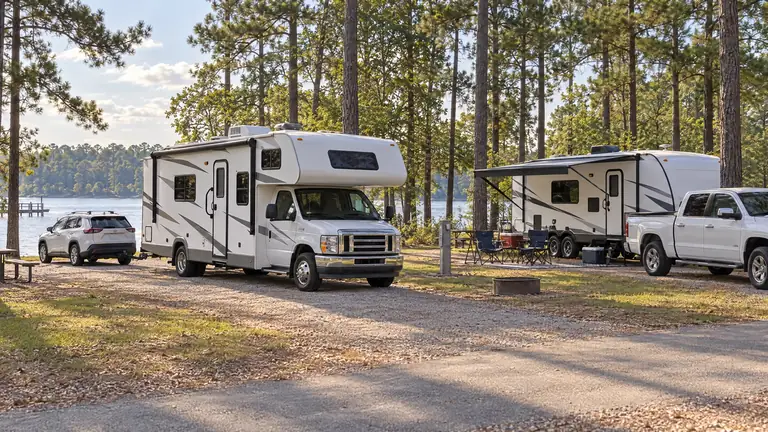
The motorhome versus travel trailer decision is a comparison of complete setups, not just RV prices. A motorhome combines transportation and living quarters, while a travel trailer needs a compatible tow vehicle that becomes your separate transportation after unhitching. Neither is universally cheaper or more convenient once you include vehicles, maintenance, insurance, storage and eventual resale.
Both are RVs, and each arrangement can work for short trips or extended travel. For Houston-area owners, the useful question is which complete setup fits your passengers, driving comfort, existing vehicles and budget.
The short version
- Compare a motorhome and any separate transportation against a travel trailer, compatible tow vehicle and towing equipment.
- Sleeping capacity does not establish safe passenger capacity; everyone needs an appropriate belted travel position.
- A trailer has no propulsion engine, but its tow vehicle and living systems still need maintenance.
- Check insurance, registration and driver-license requirements for the actual vehicles rather than assuming all RVs are treated alike.
- Condition, documentation and local demand matter more to resale than a universal depreciation rule.
| Feature | Motorhome | Travel trailer |
|---|---|---|
| Complete purchase budget | Includes propulsion and living quarters; add separate transportation and vehicle-towing equipment if needed. | Include the trailer, compatible truck or SUV if needed, and hitching equipment. |
| Transportation after arrival | Without another vehicle, outings generally require packing up and driving the motorhome. | Leave the trailer parked after unhitching and use the tow vehicle separately. |
| Passenger travel seating | Use designated belted travel positions; sleeping capacity does not establish suitable passenger seating. | Passengers should ride belted in the tow vehicle, not inside the moving trailer. |
| Setup and departure | No detaching the living unit from its propulsion vehicle; a towed car adds connection tasks. | Position the combination and manage hitching or unhitching; effort varies by equipment and location. |
| Driving and maneuvering | Size and handling vary substantially between camper vans and large coaches; towing another vehicle changes the arrangement. | Requires towing and backing skills; confirm actual vehicle capacity against the loaded trailer. |
| Engine maintenance | The RV needs engine, transmission and chassis service alongside living-system maintenance. | No propulsion engine in the trailer, but include the tow vehicle's drivetrain maintenance. |
| Living-system upkeep | Roof seals, plumbing, appliances, electrical systems, tires and brakes need attention. | The same living systems and running gear need care; no engine does not mean maintenance-free. |
| Fuel expenses | Consumption varies by size, engine and conditions; include separate transportation where relevant. | Towing reduces tow-vehicle economy; loaded weight, vehicle configuration and driving conditions matter. |
| Insurance comparison | Compare liability, physical damage, belongings and usage coverage; include any separately owned car. | Confirm tow-vehicle coverage and separate trailer protection; do not assume the auto policy fully covers both. |
| Texas requirements | Confirm registration, applicable inspection requirements and driver-license class for the actual vehicle and any towing arrangement. | Check trailer and tow-vehicle paperwork separately, plus licensing requirements for the complete combination. |
| Depreciation and resale | General guidance describes faster depreciation, but condition, model and service history determine individual resale strength. | Often described as depreciating more slowly; count tow-vehicle depreciation separately and evaluate actual trailer condition. |
| Potentially suitable owners | Owners preferring integrated transportation and living quarters, with a clear plan for local transportation. | Owners with a compatible tow vehicle who prioritize leaving the living unit parked during errands. |
Motorhome vs. travel trailer: what does the complete setup cost?
A fair cost comparison includes every vehicle and piece of equipment you need, not just the living unit. Go RVing advises trailer buyers to include a suitable truck in their budget if they do not already own one. A motorhome includes propulsion, but separate transportation can add another vehicle and towing equipment.
An existing truck changes the calculation only if it can safely handle your chosen trailer. Go RVing notes that capacity varies with the actual engine, axle ratio, tow package and other equipment. Check the vehicle documentation and hitch capacities against the loaded trailer, not just its advertised dry weight.
Separate acquisition costs from ongoing expenses so a lower purchase price does not disguise a more expensive complete setup. Our guide to the cost of owning an RV in Houston helps organize the recurring expenses.
Fuel also needs a complete-setup comparison. Consumer RV guidance from J.D. Power explains that towing reduces the tow vehicle's fuel economy, while motorhome consumption varies by size, engine and driving conditions. Compare your intended vehicles and usage, not an unhitched truck against a loaded motorhome.
- Acquisition: RV, any additional vehicle, hitch or vehicle-towing equipment, and setup gear.
- Recurring expenses: insurance, registration, fuel, storage and overnight site charges.
- Upkeep: vehicle service, RV systems, tires, seals and winterization when appropriate.
Which is more convenient on travel days and after arrival?
A trailer makes separate transportation straightforward after unhitching, while a motorhome keeps the driving vehicle and living quarters together. One RV dealer's comparison explains that you can leave the trailer in place and use its tow vehicle for errands. Without another vehicle, a motorhome outing normally means packing up and taking the living unit along.
A compatible towed car, sometimes called a toad, changes that trade-off. It provides local transportation but adds towing-capacity checks, equipment and connections to manage. A trailer requires positioning the combination and unhitching when you want to use the truck separately; neither arrangement has a universal setup-time advantage.
Driving experience also varies within categories. A camper van and a large motorhome are very different vehicles, while a truck-and-trailer combination requires towing and backing skills. Our Class A versus Class C comparison explores differences within motorhomes.
Travel seating is not sleeping capacity. Go RVing advises passengers to remain in designated belted positions while moving and strongly recommends never riding in a moving towable RV. Check suitable child-restraint arrangements, and stop before anyone walks around, uses the bathroom, cooks or rests in a bed.
Does a travel trailer need less maintenance?
A travel trailer avoids propulsion-engine maintenance on the RV itself, but it does not eliminate maintenance from the complete setup. J.D. Power's consumer guide distinguishes trailer upkeep from motorhome engine and transmission service. Your trailer's tow vehicle still needs its own drivetrain maintenance.
Both RV types need attention to roof and window seals, plumbing, appliances, electrical systems, tires and brakes. A motorhome adds engine fluids, transmission service and chassis-related work. If you also own a separate car, include its maintenance rather than treating it as cost-free transportation.
Houston's humidity, hot summers and heavy rain make storage and water-intrusion checks practical concerns for either type. Inspect seals and investigate dampness promptly; a trailer's lack of an engine does not protect its living quarters from costly damage.
Compare storage for the entire arrangement. Check the space's dimensions, access, surface, coverage and rules against your actual RV. A trailer stored away from home leaves its truck available for daily use; a motorhome with a separate car still leaves you responsible for maintaining and storing both vehicles.
How should you compare motorhome and travel trailer insurance?
Compare insurance quotes for the whole arrangement, with matching coverage goals, rather than comparing isolated RV premiums. A trailer quote alone leaves out its tow vehicle, and a motorhome quote may leave out your separate car. Ask the insurer to explain liability, damage to each vehicle, belongings and protection while parked.
The Texas Department of Insurance distinguishes accident liability from protection for damage to the RV itself. Do not assume your tow vehicle's policy fully protects the trailer. Confirm whether you need a separate RV policy or endorsement and exactly what it covers.
For Gulf Coast owners, ask specifically about flood, fire and theft protection. TDI discusses comprehensive protection for noncollision losses, but that does not establish coverage for every leak, mold problem or long-term water intrusion. The actual policy controls.
An insurer's RV guide notes that financing can bring comprehensive and collision requirements, while premiums depend on the vehicle, usage, location, coverage and driver history. Confirm requirements with your lender. If the RV will be your full-time residence, tell the insurer rather than assuming a recreational-use policy is sufficient.
What Texas paperwork and driving requirements should you check?
Check Texas requirements against the actual motorhome or truck-and-trailer combination before committing to either setup. Registration, titling, driver licensing and inspection requirements are separate questions. Use current TxDMV and Texas DPS guidance rather than assuming that an RV label answers them all.
For Texas travel trailer registration, remember that the trailer and tow vehicle are separate vehicles with their own paperwork. TxDMV says trailers with a gross weight over 4,000 pounds must be titled. Confirm the requirements for your particular travel trailer with TxDMV or your county tax assessor-collector office.
Ask Texas DPS which license class matches the vehicle ratings and combination you intend to operate. Do not decide from the words Class A motorhome alone, or from the trailer's weight alone. Have the manufacturer's rating information available when you check.
Confirm current inspection and any applicable emissions requirements with TxDMV for the specific motorhome or tow vehicle. Older ownership checklists may not reflect current rules. At a Texas vehicle purchase, the buyer pays motor vehicle sales tax when titling; confirm the transaction details and applicable registration charges with the county tax office.
Who does each arrangement suit best?
A travel trailer often suits someone with an adequate tow vehicle who wants to leave the living unit parked, while a motorhome can suit someone who prefers integrated transportation and living quarters. These are starting points, not rules about how often you should travel.
A trailer can make particular sense when your truck already serves a useful daily purpose. You retain that vehicle after unhitching, and you can later sell the trailer without selling the truck. The trade-off is handling an articulated combination and managing the hitching equipment.
A motorhome deserves consideration when buying a truck solely for towing would add substantial expense or when you prefer its driving arrangement. Decide how you will handle local transportation before choosing it. A compact motorhome may fit your needs differently from a large coach.
For a motorhome or travel trailer for retirement, prioritize the tasks you can comfortably manage: driving, backing, entry steps, connections and routine checks. Walk through those tasks on the specific model. Passenger seating, usable floor space and access matter more than a category's reputation for convenience.
Which holds its value better when you sell?
Travel trailers are often described as depreciating more slowly, but that tendency does not establish which complete setup will lose less value. J.D. Power's comparison treats the tow vehicle separately. If you buy a truck for the trailer, its depreciation belongs in your ownership calculation.
A marketplace valuation guide identifies age and overall condition as major resale factors. Roof condition, water damage, tire information, equipment and maintenance documentation matter for either type. Motorhomes also bring mileage, engine condition and chassis service history into the evaluation.
Use comparable year, make, model, equipment and condition when checking local listings. An advertised asking price is not necessarily a completed-sale price, and guidebook retail, trade-in value and an outright purchase offer are different figures. Our RV depreciation guide explains why a fixed percentage is a weak shortcut.
When switching types, compare what selling your current RV releases against the entire replacement setup. Include any newly needed truck or separate car. Keeping an already useful tow vehicle may change the decision more than the trailer's depreciation alone.
Selling either RV type in Greater Houston
We buy both motorhomes and travel trailers from owners in Greater Houston; we do not sell replacement RVs. For motorhomes, we review mileage, engine and chassis condition alongside the living systems. For trailers, we focus on the living unit, roof, seals, tires, equipment and condition.
You can sell your travel trailer in Houston or sell your Class C motorhome, and we consider other motorhome types, damaged units and non-running RVs too. Some units may not fit. Share details and photos to request a cash offer, with no fees or obligation.
We inspect, pay at signing, handle title paperwork and any lender payoff, and remove the RV at no cost. TxDMV advises filing a Vehicle Transfer Notification within 30 days; it does not itself transfer ownership.
Frequently asked questions
What vehicle is best for exploring the country without buying another car?
A travel trailer can work well if you already own a suitable tow vehicle, because that vehicle remains available after unhitching. A motorhome can also work without another car, but outings generally require taking it with you and packing up first. Compare the actual motorhome's size and your tolerance for moving the living unit, rather than assuming every drivable RV needs a towed car.
Can my current pickup handle a trailer if its dry weight is below the advertised tow rating?
That comparison alone is not enough. Go RVing advises checking the actual truck configuration and matching the loaded trailer to vehicle and hitch capacities. Dry weight can exclude water, equipment and other travel loads. Gather the truck's documentation, trailer ratings and hitch information, then confirm compatibility before purchase. Do not substitute the model's highest advertised tow rating for your own vehicle's limits.
Can a motorhome sofa safely carry children during travel?
A sofa is not automatically a suitable travel seat or child-restraint location. Go RVing advises using designated seating positions with belts fastened while the vehicle is moving. Check the specific motorhome's designated positions, belt arrangements and suitability for the restraints your children need. Advertised sleeping capacity does not answer that question, and passengers should not move to beds or other living areas during travel.
What changes if I plan to live in the RV full-time?
Tell your insurer how you will actually use the RV. The Texas Department of Insurance recommends considering full-timers coverage, including personal property and liability when you are not driving. Also compare transportation after setup, storage needs and access to service for the complete arrangement. Neither a trailer nor a motorhome automatically comes with insurance suited to full-time residence.
How accurate is a guidebook value when I want a cash offer?
A guidebook estimate is a starting point, not a promised purchase price. A marketplace valuation guide recommends comparing matching models and condition, while recognizing that asking prices are not necessarily completed-sale prices. An outright buyer also evaluates the actual RV. Provide service records, equipment details and an honest damage history so the estimate reflects your unit rather than a generic category.
Sources
- TxDMV: Register your vehicle
- TxDMV: Trailers
- Texas DPS: Classes of driver licenses
- Texas Department of Insurance: RV insurance coverage
- Go RVing: Frequently asked questions
- Go RVing: Guide to buying your first RV
- Lazydays: Motorhome vs. travel trailer
- J.D. Power: Travel trailer vs. RV
- Progressive: RV insurance basics
- RVshare: RV values and resale factors
Related pages
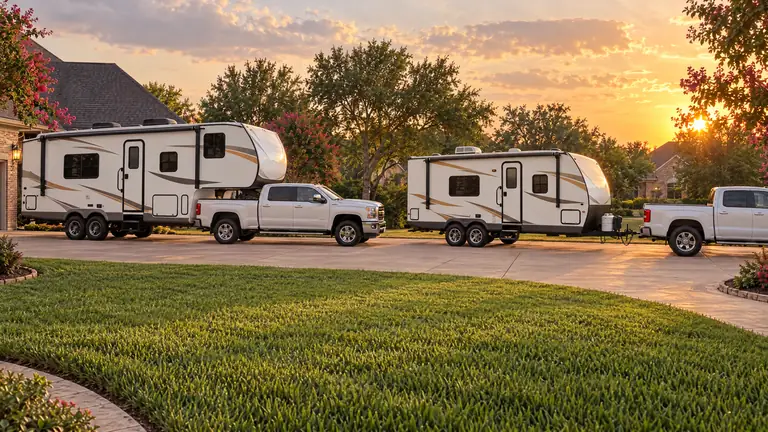 GuideFifth wheel vs. travel trailer: which is right for you?Hitch, tow vehicle, space and storage compared.Read more
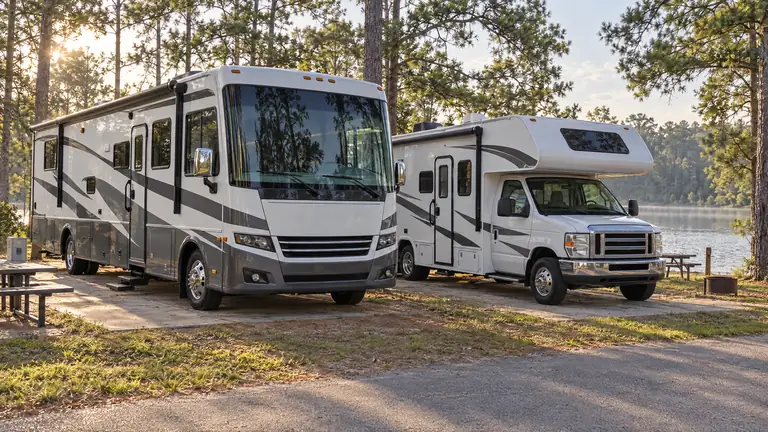 GuideClass A vs. Class C motorhome: the real differencesSize, chassis, driving and upkeep compared.Read more
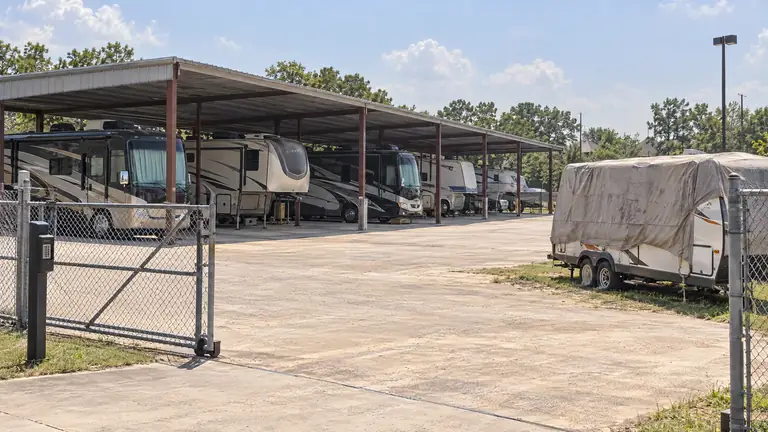 GuideThe real cost of owning an RV in HoustonStorage, insurance, registration and upkeep.Read more
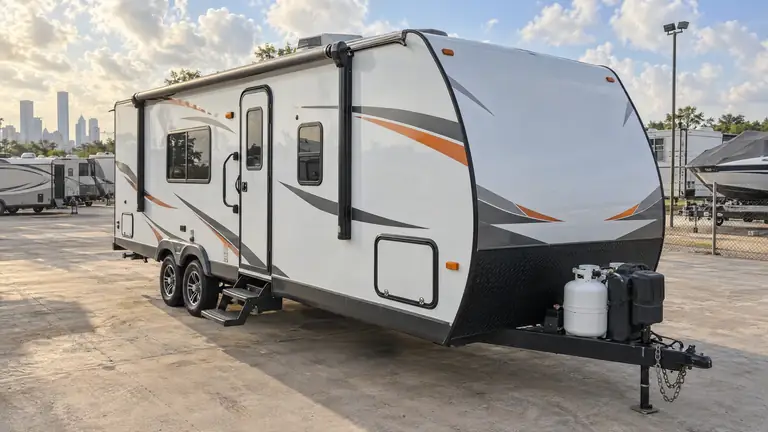 RV typeSell your travel trailer in Houston for cashBumper-pull campers of any length, age or condition.Read more
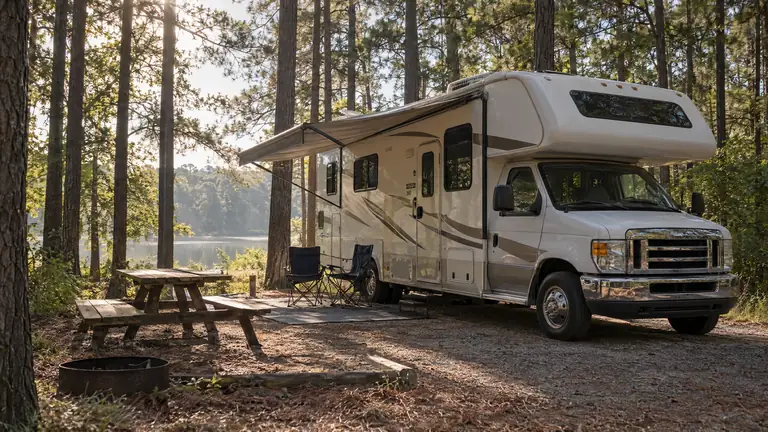 RV typeSell your Class C motorhome in HoustonCab-over motorhomes and Super Cs.Read more
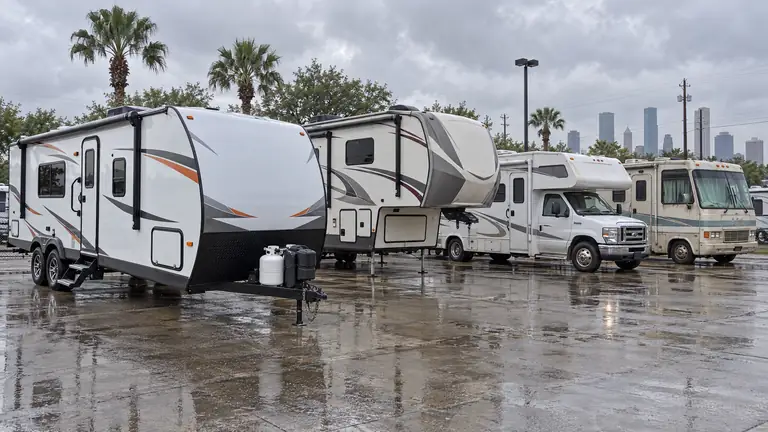 GuideRV depreciation: how fast do RVs lose value?How value changes by age, type and condition.Read more
Ready when you are
Get a real number for your RV, not a listing estimate.
Send a few details and photos. We'll come back with a cash offer, and if it works for you, we handle the paperwork and the pickup.