Fifth wheel vs. travel trailer: which is right for you?
Fifth wheel vs travel trailer: hitch and tow vehicle, stability, living space, weight, storage and resale compared. Selling either in Houston? We buy both.
Published · By the Cash For RV team, Houston
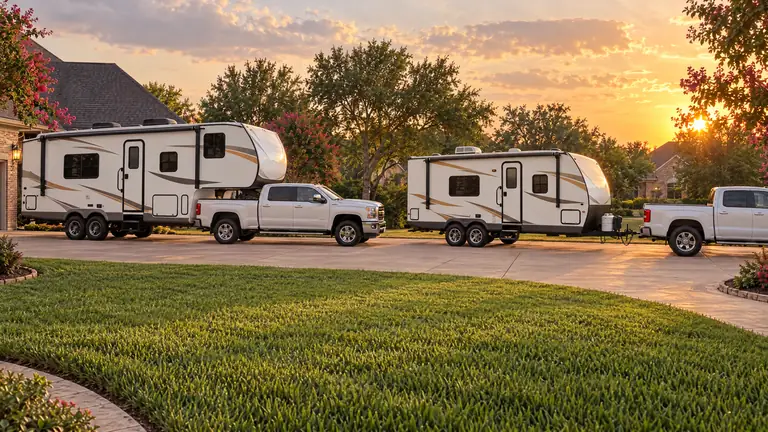
The fifth wheel vs. travel trailer choice comes down to your tow vehicle, preferred layout and total setup cost. A fifth wheel generally offers steadier towing, taller living areas and more room separation, while a travel trailer offers more tow-vehicle choices and often a lower entry cost. Neither is universally better, and your truck’s payload may decide the question before the floorplan does.
Compare specific trailers with your actual vehicle, not just category labels or advertised towing capacity. For Greater Houston owners considering a change, the useful questions are whether the loaded combination fits your ratings, whether you can manage the hitch and whether the trailer fits your storage space.
The short version
- A fifth wheel needs a suitable pickup-bed hitch arrangement, while a travel trailer can work with a wider range of properly rated vehicles.
- Payload must cover supported hitch load, passengers, cargo and hitch equipment, not the trailer’s entire weight.
- Fifth wheels generally resist conventional trailer sway better, but backing response and truck-cab clearance require attention.
- Compare the trailer, tow vehicle and towing equipment together when budgeting.
- Texas personal-use RV operators can be exempt from a CDL yet still need a noncommercial Class A license.
| Feature | Fifth wheel | Travel trailer |
|---|---|---|
| Tow-vehicle choices | Requires a suitable pickup-bed hitch arrangement; many models call for a heavy-duty pickup. | Can match appropriately rated pickups, SUVs and some vans; large models may still require a heavy-duty truck. |
| Payload and hitch load | Pin load, passengers, cargo and hitch equipment consume payload; rear-axle capacity can be a limiting factor. | Tongue load, passengers, cargo and hitch equipment consume capacity; advertised towing capacity alone is insufficient. |
| Hitch connection | Kingpin connects to a bed-mounted fifth-wheel hitch; an approved compatible gooseneck pin-box conversion is a distinct alternative. | Coupler connects to a ball on a rated receiver hitch, not directly to an ordinary bumper. |
| Towing stability | Hitch placement near the rear axle generally improves stability and resistance to conventional trailer sway. | Rear-mounted coupling is generally more sway-sensitive; proper loading, equipment and setup remain important. |
| Weight distribution | Uses its bed-mounted hitch and pin-box system rather than conventional travel-trailer weight-distribution equipment. | May require weight distribution; sway control is a different function and can be integrated or separate. |
| Backing and turns | Generally slower reversing response; check cab clearance, particularly with short beds. | Generally quicker reversing response; long models still require substantial maneuvering space. |
| Overall combination length | Front overlap with the truck bed can shorten the combination compared with a similar-length conventional trailer. | Most trailer length sits behind the vehicle; compare actual vehicle, hitch and trailer dimensions. |
| Interior layout | Commonly split-level, with an elevated front room and interior stairs. | Usually a more continuous main floor; floorplan and slide-outs determine usable space. |
| Ceilings and amenities | Generally taller main living areas and more room separation; check headroom throughout. | Generally lower ceilings, but larger models can offer substantial space and residential features. |
| Storage tradeoff | Often larger exterior storage bays, but hitch equipment and front overhang reduce usable truck-bed space. | Often less onboard exterior storage, but preserves more pickup-bed space, subject to payload limits. |
| Height and access | Usually taller and larger; verify overhead and storage-building clearance. | Compact models offer more clearance flexibility, but confirm the specific trailer’s dimensions. |
| Purchase and setup cost | Generally higher trailer and setup costs, especially when a truck upgrade is necessary. | Generally lower entry cost, but an unsuitable existing vehicle can still require an expensive change. |
| Resale value | Higher original price does not guarantee better retention; model, condition and local demand matter. | Lower original price does not guarantee a resale advantage; distinguish retail estimates from cash offers. |
Fifth wheel vs. travel trailer: how do the hitches differ?
A conventional fifth wheel connects inside a pickup bed, while a conventional travel trailer connects to a hitch ball behind the tow vehicle. Lippert explains that a fifth wheel’s kingpin locks into a bed-mounted fifth-wheel hitch beneath the trailer’s raised front section.
A travel trailer’s coupler connects to a ball on a properly rated receiver hitch. The common term “bumper pull” does not mean attaching a full-size RV directly to an ordinary bumper. A travel-trailer weight-distribution hitch redistributes hitch loading; sway control is a separate function that may be integrated into the same equipment.
A fifth-wheel gooseneck adapter needs careful checking. Lippert distinguishes kingpin-mounted extension adapters, which change leverage and can increase mounting-area stress, from replacement gooseneck pin boxes. Confirm the exact product’s fit, trailer/frame approval and warranty compatibility rather than assuming every conversion is interchangeable.
Can a half-ton tow a fifth wheel?
Some half-ton trucks can tow selected lightweight fifth wheels, but the truck’s specific configuration and loaded capacities must support the combination. Most fifth wheels point owners toward a heavy-duty three-quarter-ton or one-ton pickup, according to one RV dealer’s comparison guide. A “half-ton towable” label is not approval for your particular truck.
Ford explains that payload must accommodate supported tongue or pin load, occupants, cargo and hitch equipment. The entire trailer does not count against truck payload. However, hitch load can exhaust available payload or rear-axle capacity before you reach the advertised maximum towing figure.
One RV dealer’s guide gives broad planning ranges of approximately 15–25% of loaded trailer weight for fifth-wheel pin load and approximately 10–15% for travel-trailer tongue load. These are estimates, not substitutes for measured loads and manufacturer requirements. Dry weight and brochure hitch weight do not tell you what a travel-ready combination weighs.
- Check the vehicle certification label, configuration-specific towing guide and hitch ratings.
- Include passengers, bed cargo, accessories and hitch equipment in the truck’s carried load.
- Verify loaded vehicle weight, rear-axle load and combined weight against the applicable ratings.
Is a fifth wheel easier to tow and park?
A fifth wheel generally has a highway stability advantage, but it is not automatically easier to reverse or park. Its hitch sits over or just forward of the truck’s rear axle, reducing susceptibility to conventional trailer sway compared with a rear-mounted ball connection.
That advantage does not make the combination windproof or correct poor loading. Travel trailers also need appropriate loading, suitable hitch equipment and correct setup. Weight distribution does not increase the vehicle’s GVWR, axle ratings or manufacturer tow rating.
Lippert notes that fifth wheels generally respond more slowly to steering inputs while reversing. Tight turns require checking cab-to-front-cap clearance, especially with a short bed; some combinations need a sliding hitch. A fifth wheel can produce a shorter overall combination because its front overlaps the bed, but actual truck, trailer and hitch dimensions determine the difference.
Which layout works better for full-time living?
For full-time living, a fifth wheel often offers more room separation and taller ceilings, but the better choice depends on the specific floorplan and your ability to use its stairs. The raised front section commonly creates a split-level interior with an elevated bedroom or front living area.
Travel trailers usually offer a more continuous main floor. That can be preferable if you want fewer interior steps, although entry steps and individual layouts still need checking. Large travel trailers can also have residential appliances, substantial slide-outs and comfortable living areas.
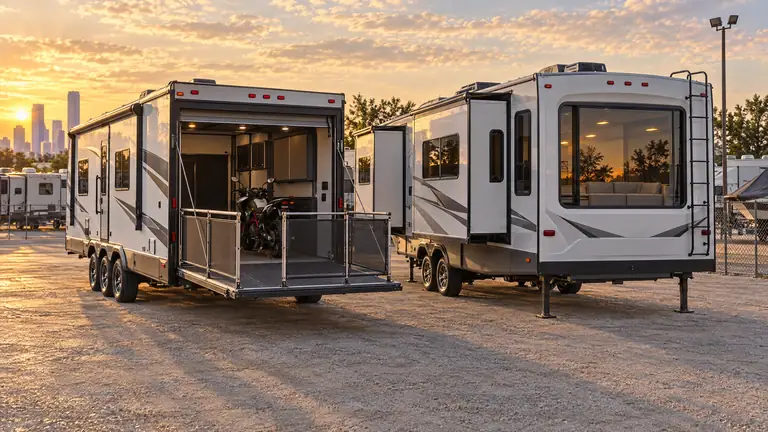
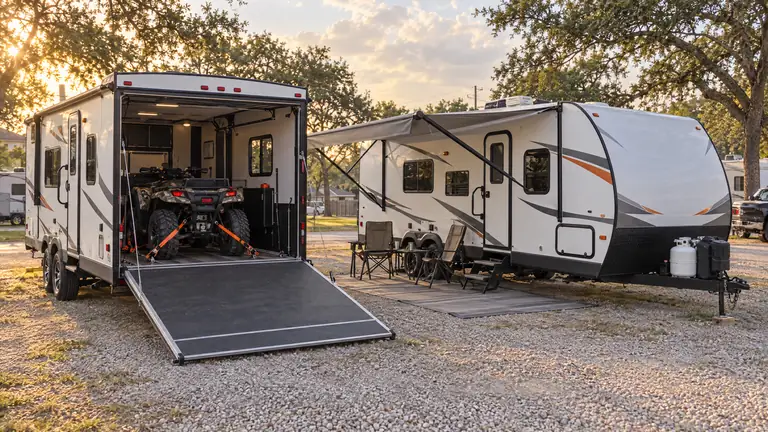
Walk through the trailer with the slides both extended and retracted where practical. Check headroom in the front room, bathroom access, usable kitchen space and whether daily routes require stairs. If equipment storage is part of your decision, our toy hauler and fifth-wheel comparison explains how a garage changes available living space.
How do weight, storage height and Texas licensing affect the choice?
Actual weight ratings and dimensions determine whether either trailer fits your vehicle, storage space and Texas license class. Fifth wheels are generally heavier and taller, but large travel trailers overlap their weights and dimensions.
Ford distinguishes gross combination weight, the actual loaded vehicle-and-trailer weight, from gross combination weight rating, the manufacturer’s permitted maximum. Your measured combined weight must stay within that rating. Do not substitute dry trailer weight or assume GCWR always equals the sum of the vehicle and trailer GVWRs.
Texas DPS places combinations with GCWR of 26,001 pounds or more and towed-vehicle GVWR exceeding 10,000 pounds in its noncommercial Class A classification. Qualifying personal-use RV operators are CDL-exempt, but that exemption does not mean an ordinary Class C license always suffices. This can apply to either trailer type; confirm your requirements with Texas DPS.
Measure storage-door clearance and the trailer’s actual overall height, including rooftop equipment. Fifth wheels often provide larger exterior storage bays but consume truck-bed space. Travel trailers preserve more bed space, although anything carried there still counts against payload.
Which option costs less overall?
A travel trailer often has a lower entry cost, but the cheaper complete setup depends on the vehicle and equipment you already own. Compare the trailer cost with any required truck replacement, hitch installation and towing equipment.
A fifth wheel that requires a truck upgrade can change the budget substantially. A larger travel trailer can create the same problem if your current vehicle lacks payload or towing capacity. Get estimates for the actual combination before committing to either category.
Fuel, insurance, maintenance and storage costs vary by model and use, so neither category earns a universal running-cost advantage. Also compare construction and warranty details at similar price points; a fifth-wheel label alone does not establish better materials or workmanship.
Who does each trailer type suit best?
A fifth wheel usually suits someone with a compatible pickup who prioritizes room separation and towing stability, while a travel trailer often suits someone who wants broader vehicle choices or a more continuous floor. Start with the limits of your existing vehicle, then compare layouts that genuinely fit.
Neither choice requires abandoning comfort or accepting an unsuitable tow vehicle. If keeping your current truck is important, reject combinations that exceed its ratings even when the trailer’s interior is appealing.
- Consider a fifth wheel if its stairs, height, bed-mounted hitch and truck requirements fit your needs.
- Consider a travel trailer if preserving bed space, using a suitable SUV or van, or choosing a compact layout matters more.
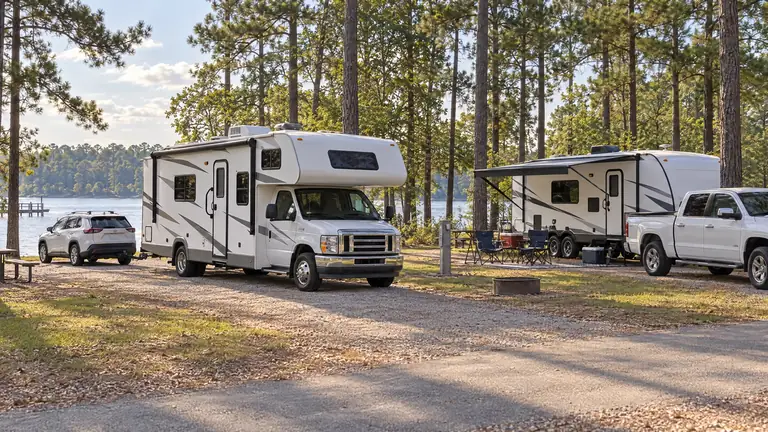
- Compare a motorhome with a travel trailer if managing a truck-and-trailer combination is the underlying concern.
Does either type have better resale value?
Neither fifth wheels nor travel trailers have a guaranteed resale-value advantage. A higher original purchase price does not prove better percentage retention, and a lower purchase price does not establish a better investment.
A published RV valuation guide identifies type, brand/model, age, features, condition and demand as important value factors. Roof damage, leaks, water damage and systems that do not work can reduce value in either category. Compare similar recently sold units and current local conditions rather than relying on asking prices alone.
A retail guide estimate, a private seller’s advertised price and a cash purchase offer describe different situations. Our guide to what your RV may be worth explains how to approach those distinctions when deciding whether to keep or sell your current trailer.
Selling either trailer in Greater Houston
We buy both fifth wheels and travel trailers from owners in Greater Houston, including worn, damaged and end-of-life units. For either type, we review the brand, model, year, photos, roof and leak history, and working systems. Describe damage and hitch-related concerns clearly; some units may not be a fit, and we say so honestly.
If you want to sell your fifth wheel or sell your travel trailer, share the details through our cash-offer form. We review them and make an offer, often the same day, then arrange an in-person look where the RV is located.
If its condition matches your description, the offer stands. At signing, we pay, handle title paperwork and any lender payoff, and remove the RV at no cost. There are no fees, commissions or obligation. We only buy RVs; we do not provide replacement units.
Frequently asked questions
If my trailer will stay put, is a fifth wheel still worth considering?
Yes, if its room separation, ceiling height and exterior storage fit your needs better. When you rarely move the trailer, its towing advantage may matter less than the interior. Compare the actual kitchen, bathroom, front-room headroom and stairs. You still need a suitable arrangement for any future move, and a large travel trailer may provide the space you want.
Our weight-distribution hitch is getting difficult to handle. Would a fifth wheel help?
A fifth wheel changes the hitching tasks, but it does not automatically make every task physically easier. You would use a bed-mounted hitch rather than conventional spring bars, while still managing connections, landing gear and safety checks. Before changing trailers, try the complete hitching procedure on a suitable fifth-wheel setup and assess truck-bed access and equipment handling.
Which is easier to hook up, a travel trailer or a fifth wheel?
The easier setup is the one you can align, connect and verify safely with your particular equipment. A travel trailer requires positioning its coupler over a ball and fitting any required weight-distribution or sway-control components. A fifth wheel requires aligning the kingpin with the bed hitch and confirming proper engagement. Practice and access matter more than the category alone.
Will switching trailer types improve my fuel mileage?
Do not count on a fuel-mileage improvement simply from switching categories. Trailer weight, shape, height, tow vehicle, speed and operating conditions all affect fuel use. Compare the specific combinations you are considering rather than assuming every travel trailer is more economical or that a fifth wheel’s overlap with the truck guarantees better efficiency.
Are fifth-wheel campers built better than travel trailers?
Not simply because they are fifth wheels. One RV dealer’s comparison notes that comparable price points can involve similar materials and construction methods. Inspect the particular model’s construction, maintenance history and warranty terms. A well-maintained travel trailer can be a better choice than a fifth wheel with leaks or neglected systems, regardless of their original category or price.
If I keep my half-ton, should I choose a smaller fifth wheel or a travel trailer?
Start by identifying combinations your exact truck can support when loaded. A compact travel trailer may leave more capacity available, but neither a small footprint nor a lightweight label proves compatibility. Compare measured hitch load, occupants, cargo and equipment with payload and axle limits, then verify towing and combined-weight ratings. Choose the layout only after those checks.
Sources
Related pages
 GuideToy hauler vs. fifth wheel: garage or more living space?Garage space vs living space in a fifth wheel.Read more
 GuideToy hauler vs. travel trailer: what's the difference?Garage, ramp, weight and living space compared.Read more
 GuideMotorhome vs. travel trailer: comparing the full pictureDrivable vs towable: cost, convenience and upkeep.Read more
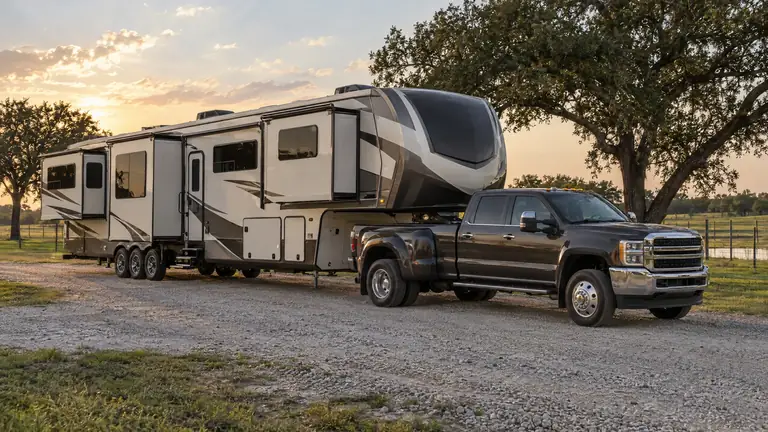 RV typeSell your fifth wheel in Houston for cashLarge towables, multiple slides, any brand.Read more
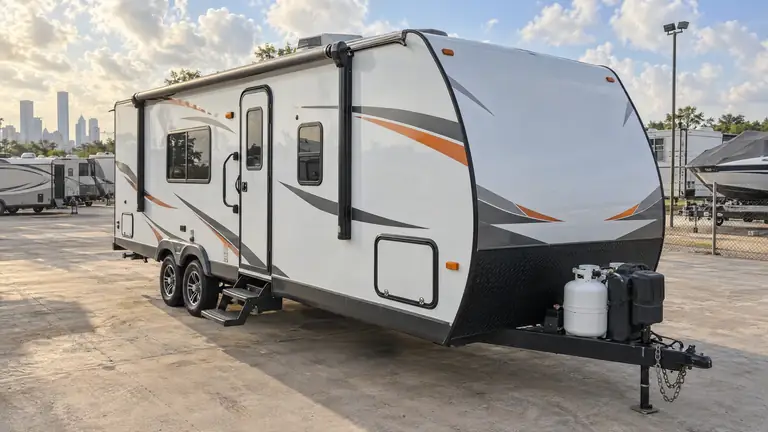 RV typeSell your travel trailer in Houston for cashBumper-pull campers of any length, age or condition.Read more
 GuideHow much is my RV worth?Book values, comps, condition and what cash buyers pay.Read more
Ready when you are
Get a real number for your RV, not a listing estimate.
Send a few details and photos. We'll come back with a cash offer, and if it works for you, we handle the paperwork and the pickup.