How long do RVs last?
How long do RVs last? Typical lifespans by RV type, miles for motorhomes, and how roofs, tires, appliances and Houston humidity affect when it's time to sell.
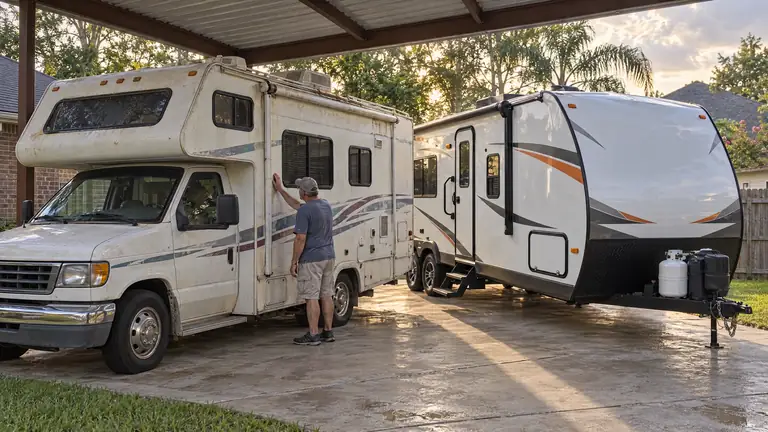
Published · By the Cash For RV team, Houston
RVs can last for decades, but there is no fixed expiration age. One RV operator's guide gives a broad planning range of 10–30 years or 100,000–300,000 miles, depending on type, storage, use and maintenance. Those figures are estimates, not a measured industry average or a whichever-comes-first retirement rule.
RV life expectancy is best judged as several separate lifespans: the chassis, the living structure and the equipment inside. A sound engine cannot make up for a rotting floor, while worn tires or a failed refrigerator do not necessarily mean the entire RV is finished.
The short version
- Whole-RV lifespan ranges are planning estimates, not mandatory retirement ages.
- Motorhome mileage matters, but water damage and maintenance history matter too.
- Towable longevity depends more on structural condition than an engine-style mileage limit.
- Roof membranes, sealants, tires, batteries and appliances have different service needs.
- Compare documented repair needs with your plans before deciding to keep or sell an older RV.
How long do RVs last by motorhome type?
Motorhome lifespan varies by chassis and care, and published ranges should guide inspection rather than replace it. Engine and transmission condition are only part of the picture; the roof, walls, plumbing and electrical systems age independently.
A storage-industry guide estimates gas Class A motorhomes at 15–20 years and 100,000–150,000 miles, describing that mileage as a point where major drivetrain expenses may accelerate. It is not an engine maximum or a proven retirement threshold. The same guide estimates diesel pushers at 20–30 years and 200,000–300,000-plus miles with scheduled maintenance, an achievable range rather than guaranteed life.
An RV marketplace guide estimates Class B camper vans at approximately 10–20 years and 200,000–300,000 miles, noting their standard van platforms. It estimates Class C motorhomes at approximately 10–25 years and 200,000-plus miles, while warning that exceeding cargo-carrying limits strains the engine, transmission and suspension.
These editorial estimates do not establish which individual coach will last longest. When asking how many miles is a lot for a motorhome, check chassis-specific service history alongside the condition of the living area.
How long do travel trailers, fifth wheels and pop-up campers last?
Towables can remain useful for many years, but structure and moisture protection are better measures than an engine-based mileage figure. They accumulate wear during towing, yet there is no universal lifetime mileage limit for these RVs.
An RV marketplace guide estimates well-maintained travel trailers at roughly 10–20 years, with some lasting substantially longer, and groups fifth wheels into that same approximate range. It estimates pop-up campers at approximately 10–15 years, emphasizing canvas condition and storage care. Renewed fabric or other replaceable parts can keep a camper useful beyond that estimate.
Inspect the frame, roof support, walls, floors, suspension and running gear before drawing conclusions from age. For toy haulers, hybrids and truck campers, the same condition-first approach is more useful than assigning an unsupported class-specific deadline. Sound structure and documented maintenance matter more than a birthday.
How long do RV roofs last?
An RV roof's lifespan depends on its material, installation and maintenance, while its seams and sealants need separate attention. Dicor says its properly maintained roof should last a minimum of 20 years and that its membrane has been weather-tested for 20 years. That manufacturer statement does not apply automatically to every EPDM, TPO, fiberglass or metal roof.
Dicor also describes a 12-year sheeting warranty that excludes original installation, glue, lap sealant and butyl tape. A membrane warranty is therefore not a promise that the complete installed roof will stay leak-free without maintenance.
One RV retailer's maintenance guide recommends an eyes-on roof and seal inspection every six months, including cracked or peeling lap sealant around vents, skylights and edges. Your RV and roofing manufacturer's maintenance and roof-access instructions should control. Failed roof, window and slide seals can admit water into walls, floors and substructure.
Soft areas deserve investigation, but a roof bubble alone does not prove rot; Dicor notes that some bubbles result from installation, flexing, temperature or humidity without impairing performance. Use our guide to RV water-damage warning signs to understand what merits closer inspection.
How long do RV tires and batteries last?
Tires and batteries age differently, so neither should be judged solely by RV mileage. Michelin says tire life depends on design, maintenance, climate, driving and road conditions; heat cycles, UV and ozone can age rubber even when tread remains.
Michelin recommends thorough annual professional tire inspections after five years of service and precautionary replacement at ten years from manufacture, including spares. These are Michelin's recommendations, not permission to keep every RV tire that long. Follow the applicable vehicle and tire manufacturer's instructions and replace sooner when condition requires.
Michelin explains that the last four digits of a tire's DOT code identify its manufacturing week and year. Its example, 3520, means the 35th week of 2020; that date is not necessarily when the tire was purchased or installed.
One RV retailer's maintenance guide gives flooded lead-acid batteries a broad 2–7-year range and says AGM and lithium types can last longer. The same guide recommends checking charge before trips and monthly during storage, and avoiding damaging deep discharge. Use the battery and charging-system manuals rather than applying one lifespan to every chemistry.
What should you expect from appliances, slides and generators?
RV equipment often needs attention before the whole vehicle reaches the end of useful life, and replacement expectations vary by component. Keep the separate equipment manuals because maintenance requirements are model-specific.
Lippert gives RV refrigerators an approximate 10–15-year lifespan, depending on refrigerator type, use and maintenance. Watch for declining cooling performance, leaks and unusual noise. An RV retailer's guide estimates most maintained RV air conditioners at approximately 6–8 years, not a universal replacement deadline.
That retailer recommends clean A/C filters, checking and cleaning coils at least annually, and keeping the protective shroud sound. Slide-outs have no universal lifespan established here: inspect their seals and mechanisms, and investigate binding, uneven movement or leaks rather than assuming age alone calls for replacement.
Cummins recommends ideally exercising its RV generators for two hours monthly at roughly 50–70% load; its gasoline guidance specifies at least 50% load. Follow your model manual rather than merely starting the generator briefly. Exercise helps remove moisture, lubricate parts and seals, and control gasoline varnishing, but it does not establish a universal lifetime-hour cutoff.
How does Houston weather affect RV longevity?
Houston weather makes exterior protection and moisture checks important, but it does not establish a fixed shorter local RV lifespan. The National Wildlife Federation describes Houston's climate as humid subtropical. Heat, sun and moisture are practical reasons to stay attentive to tires, seals, roofs and stored batteries.
Covered or enclosed storage can reduce direct exposure where practical, but it does not replace inspections. Check for leaks and interior dampness even when an RV sits unused. One RV retailer notes that a dehumidifier can assist an air conditioner with moisture removal; neither device fixes water entering through a failed seal.
For a stored Houston RV, use a short condition checklist rather than assuming low mileage means good preservation. Ask about storm exposure without assuming every local RV has flooded.
- Check roof penetrations, window seals and slide seals for deterioration.
- Look for damp cabinets, soft flooring and evidence of rodent activity.
- Ask whether floodwater entered and whether resulting repairs are documented.
- Let awning fabric dry completely before storage and retract it in high winds.
How old is too old for an RV, and when should you stop repairing it?
An RV is too old for your needs when its condition, safety concerns or repair burden no longer make sense for you, not when it reaches a universal birthday. Physical life and economic life are different: a unit may remain repairable while continued ownership becomes unattractive.
A failed appliance is different from widespread structural deterioration. Get an inspection and written estimates that separate urgent safety work, active leaks, structural repairs and optional improvements. Compare the combined repair burden with your intended use and likely value, without assuming every replacement returns its full cost.
Our fix-or-sell decision guide can help organize that comparison, while our RV depreciation guide explains why age is only part of value. Gather roof inspections, resealing receipts, drivetrain service records, appliance replacements and tire dates before deciding.
- Widespread soft floors or walls need structural evaluation.
- Recurring leaks after repairs deserve further investigation.
- Several major systems needing work can change the ownership decision.
- A professional inspection is more useful than age or odometer readings alone.
Selling an older RV as-is in Greater Houston
You can ask us to consider your older RV as-is instead of completing repairs first. Cash For RV only buys RVs from owners in Greater Houston; we do not sell, consign, rent or repair them. We consider every RV type, including worn, damaged, flood-damaged, non-running and end-of-life units, although some may not be a fit.
Start with our options for selling an old RV in Houston or request a cash offer with details and photos. We review them, give an offer often the same day, and arrange a quick in-person look wherever the RV is locally.
If its condition matches your description, the offer stands; significant undisclosed issues are explained, and you can decline. There are no fees, commissions or obligation. At signing, we pay, handle title paperwork and any lender payoff, then tow or drive the RV away at no cost.
Frequently asked questions
Which RV class lasts the longest?
A maintained diesel pusher may have substantial drivetrain longevity, but that does not make it the automatic winner for whole-RV life. Roof leaks, structural damage and neglected equipment can end practical use while its engine remains sound. Compare the specific chassis, coach structure, maintenance records and replacement needs rather than selecting a class solely from published lifespan ranges.
Is a high-mileage RV necessarily worse than one that sat unused?
No. Regular use with documented maintenance can be preferable to prolonged neglect, even when the odometer is higher. An unused RV can develop moisture accumulation, deteriorated gaskets and rodent damage. For a motorhome, have the drivetrain assessed and inspect the living structure separately; low mileage is not a substitute for either inspection.
Can repairs keep a travel trailer going indefinitely?
Replacing fabric, appliances, seals or running gear can extend useful service, but repairs do not guarantee unlimited life. Frame damage, deteriorated roof support or extensive floor and wall damage may require substantial rebuilding. Ask an inspector to distinguish isolated replaceable problems from broader structural deterioration, then decide whether the work fits your intended use and budget.
Does a newer refrigerator or roof make an old RV worth keeping?
It can improve the case for keeping it, but inspect the rest of the RV before deciding. Confirm what the replacement included, how it was installed and whether records are available. A new roof membrane does not automatically mean damaged decking was repaired, and a working refrigerator does not resolve chassis, electrical or plumbing problems.
Can brand reputation tell me how much life my RV has left?
Brand reputation alone cannot establish an individual RV's remaining life. Owners' experiences can suggest inspection questions, but storage, leaks, loading and maintenance differ between units. Use the exact model's manuals and service records, then get a condition assessment. A well-documented older RV may be a better ownership prospect than a neglected example of a highly regarded brand.
Sources
- Dicor: Roof maintenance and membrane FAQ
- Michelin: When to replace tires
- Lippert: Choosing an RV refrigerator
- Cummins: RV Generator Handbook
- National Wildlife Federation: Houston climate profile
- Cruise America: RV lifespan planning ranges
- RecNation: RV life expectancy estimates
- RVshare: RV mileage and lifespan estimates
- Camping World: Basic RV maintenance tips
- Camping World: RV air conditioner questions
Related pages
 GuideHow many miles is a lot for a motorhome?Engine life, generator hours and low-mile risks.Read more
 GuideRV depreciation: how fast do RVs lose value?How value changes by age, type and condition.Read more
 GuideShould you fix your RV before selling it?Which repairs pay off and when to sell as-is.Read more
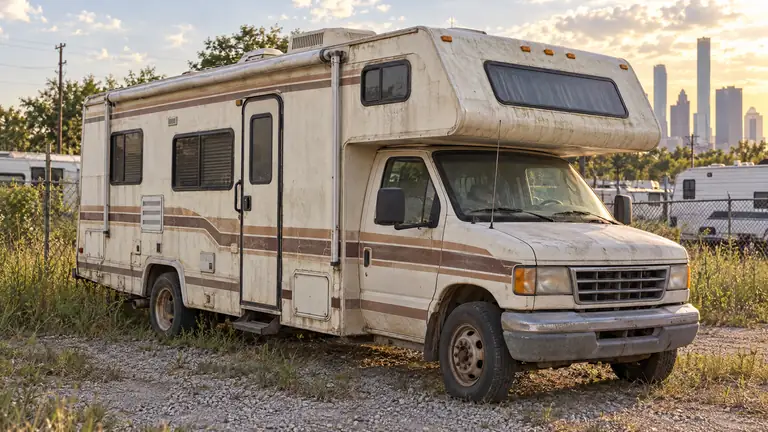 SituationSell an old RV or camper in HoustonOlder motorhomes and campers dealers pass on.Read more
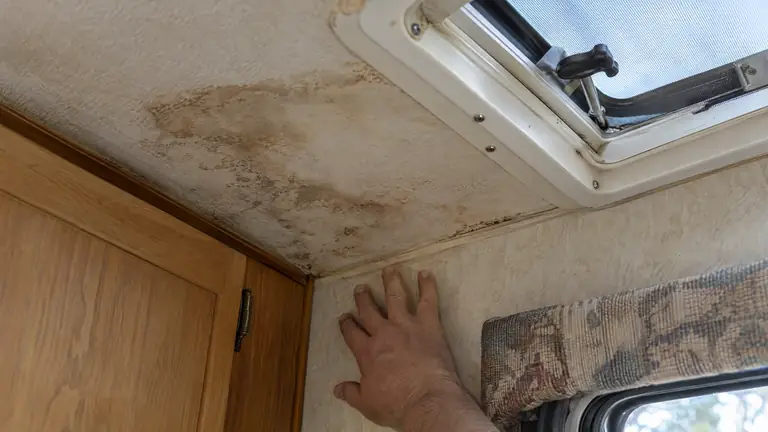 GuideSigns of RV water damage, and what they mean when you sellWhere to look, how to test, and what it means for value.Read more
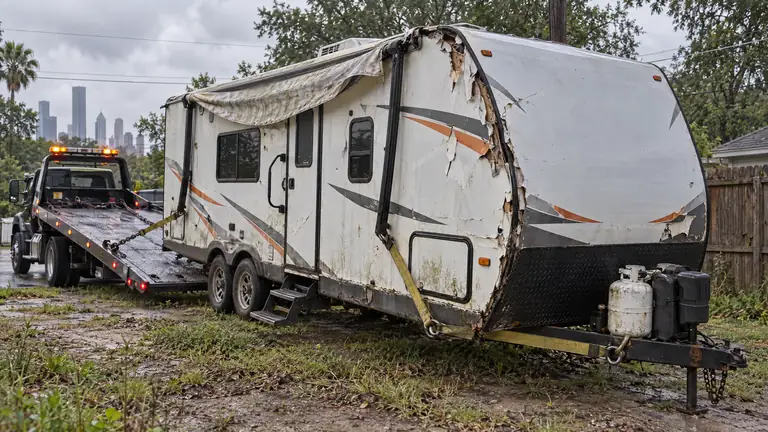 SituationCash for junk RVs and campers in HoustonEnd-of-life RVs and campers hauled away.Read more
Ready when you are
Get a real number for your RV, not a listing estimate.
Send a few details and photos. We'll come back with a cash offer, and if it works for you, we handle the paperwork and the pickup.